
Fallen Tear: The Ascension · Map & Locations · Page
Fallen Tear The Ascension Full Map — Regions of Raoah and How the Map Works
A Fallen Tear The Ascension full map reference: the named regions and biomes of Raoah, how the in-game map reveals itself, and why players get lost.
Is There a Full Map of Raoah?
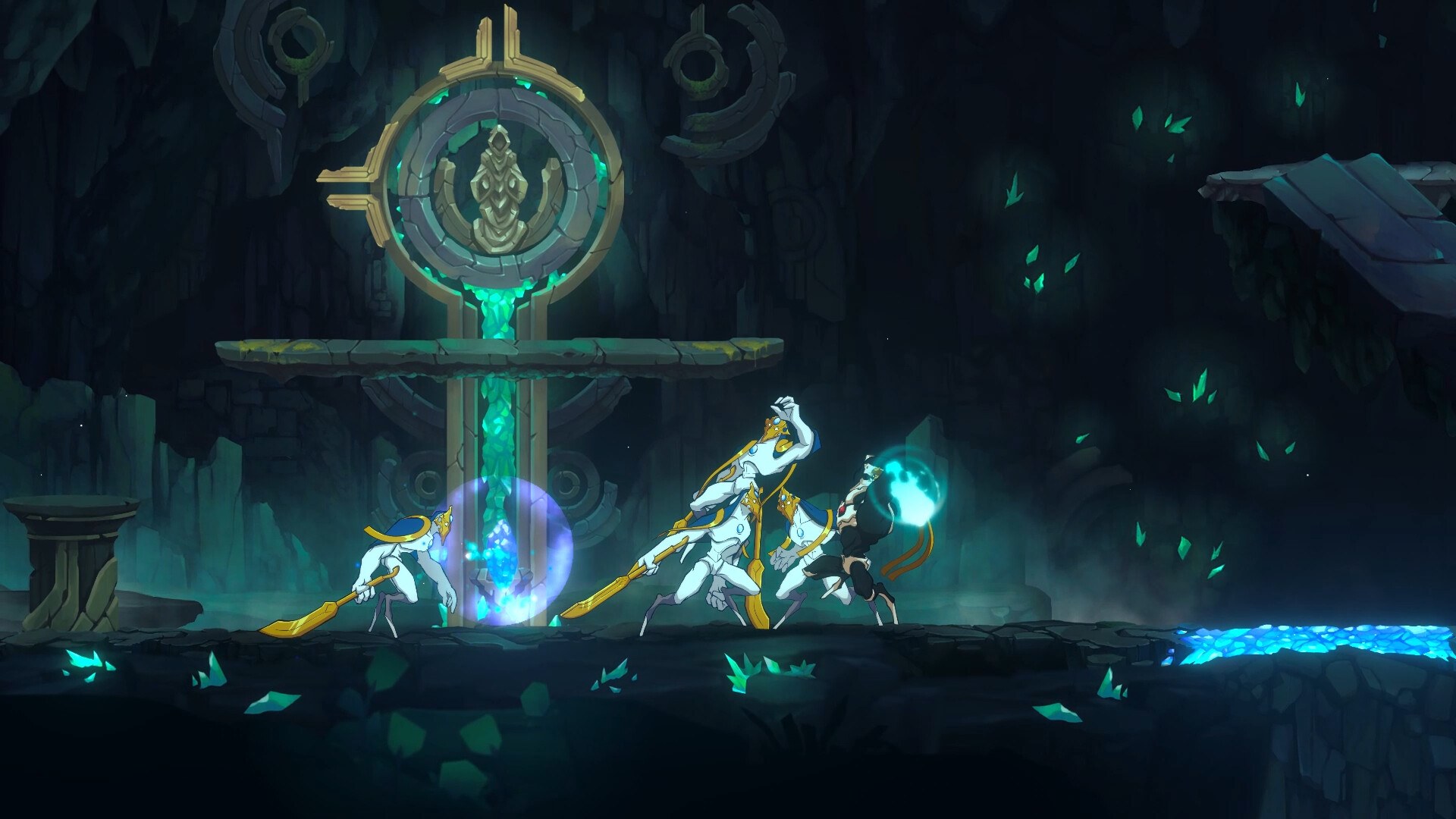
There is no published full map of Fallen Tear: The Ascension, and that is the honest starting point for this page. The Steam store page, the official site and the 1.0 announcements all describe the world of Raoah in counts and samples rather than publishing a diagram, and no third-party source in these materials has produced a complete charted map either. What does exist, and what this page collects, is the set of region and biome names that official sources actually use, plus the documented behaviour of the in-game map.
That gap matters because the map is where players report the most friction. A COGconnected preview describes the problem bluntly: every area is massive, the map is not detailed enough to make it easy to tell where you are, and the author missed the ability to mark up the map that many Metroidvanias feature. Later, the same preview says it had to run around checking every scrap of the map to work out how to progress. If you are looking for a labelled full map, you are looking for something the game does not currently provide.
How Many Regions, and How Big Is Raoah
The official counts do not agree with each other, because they were written at different points in development. Reading them as a timeline is more useful than picking the largest number.
| Official source | Region or biome figure | When it applies |
|---|---|---|
| Kickstarter campaign page | 26 interactable biomes, "and more" | Campaign copy from 2024 |
| Official site (current) | 26 interactable biomes; "over 150 enemies and bosses" | Current marketing copy |
| Steam store description | Over 10 of Raoah's interconnected regions | Copy carried over from the Early Access build |
| 1.0 launch announcement | 10 additional major regions added by the full release | Version 1.0, 23 September 2026 |
| Third-party overview video | 26 biomes and over 40 hours of content | Pre-launch overview of the planned full version |
No official source publishes a single final total for version 1.0, so treat any specific "there are exactly N regions" claim as an inference rather than a documented figure. The one figure that is stated as an addition rather than a total is the 10 additional major regions in the 1.0 announcement.
The Named Regions and Biomes
These are the places that appear by name in official text, which makes them the only reliable landmarks for building your own mental map. Everything in the table is quoted from the official site or from the official patch notes; nothing here is inferred from a map screen.
| Region or biome | Where the name comes from | What the source says about it |
|---|---|---|
| Silent Spring | Official site key features | Named as one of the 26 interactable biomes |
| Lilac Mire | Official site key features, official patch 1.0.1 notes | Named as a biome; the patch notes mention Combat Areas here and enemy behaviour fixes |
| Godspire Ruins | Official site key features | Named as one of the 26 interactable biomes; a God Spire shrine appears in the opening quest |
| Ageuan: Water Kingdom | Official patch 1.0.1 notes | Water pipes alter traversal speed; a hidden area here was made easier to find |
| Bislow: Earth Kingdom | Official patch 1.0.1 notes | Site of Haslan: The Earth God; a guard here previously blocked progression |
| Zapana: The Wind Kingdom | Official patch 1.0.1 notes | Platforming traversal in several areas was improved |
| Nargun's Cradle | Official patch 1.0.1 notes | One-hit trigger spikes that return Hira to a safe point were adjusted |
| Paupao Falls | Official patch 1.0.1 notes | Home to the Injured Elder, who gained voice lines to signal his position |
| Temple of Oras | Steam store description and opening quest | Hira's hub base, not a wilderness region; the official site calls the same castle system Sanctuary |
A tenth-era note for anyone charting the world themselves: the 1.0 announcement says the opening portion of the game was reworked so the world is more open and less semi-linear than it was in Early Access. Guides and maps drawn from Early Access footage therefore describe a different early layout from the current build.
How the In-Game Map Actually Works
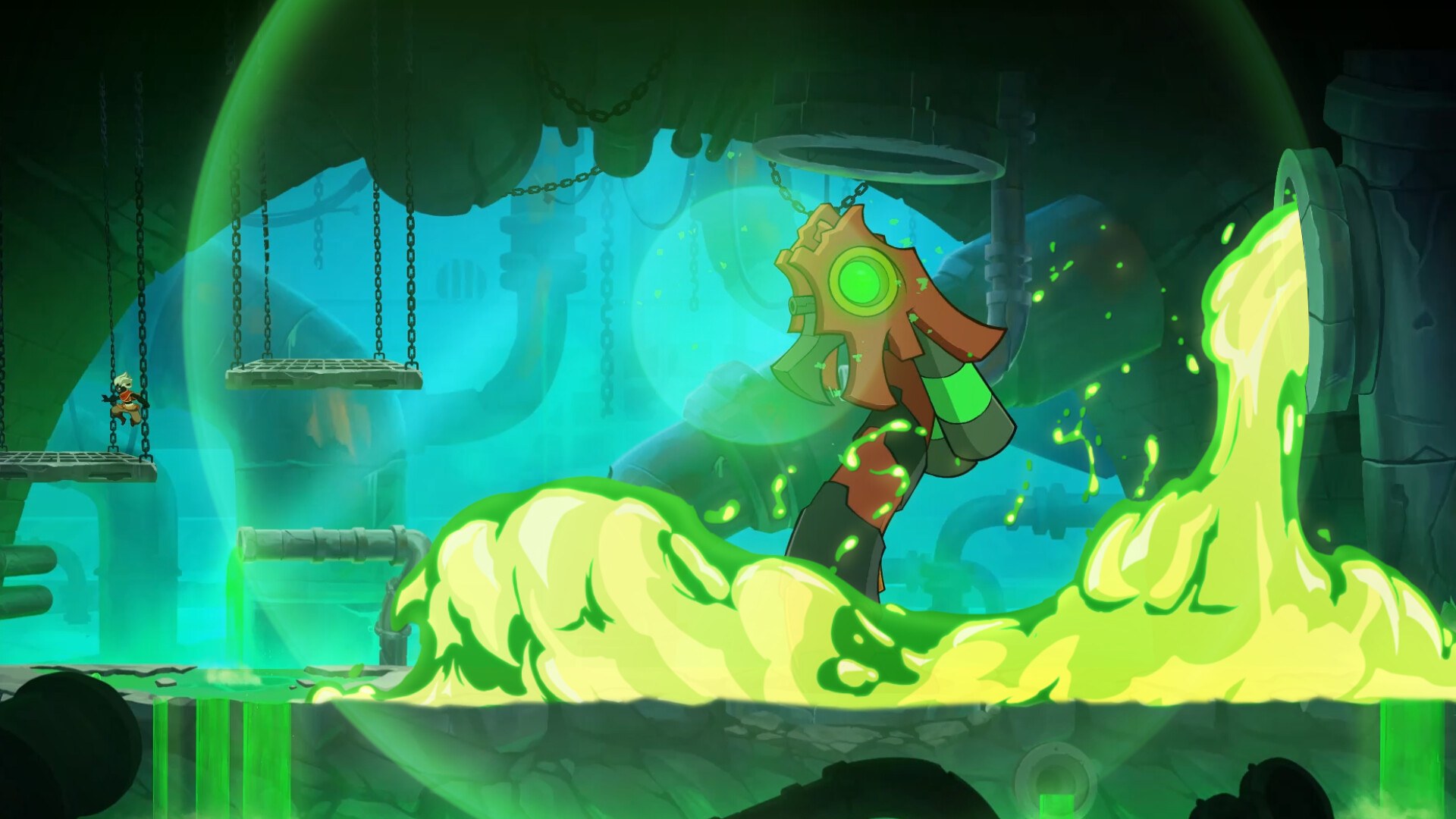
The map is a discovery tool, not a reference document, and several of its documented behaviours explain the wandering that players report.
- It fills in as you explore. Progress in the classic Metroidvania sense unlocks new paths in previously visited zones, according to a third-party overview of the game.
- It is a living structure, not a static diagram. The same overview reports that the map changes in response to player actions, which means a route you remember may not be the route that exists later.
- Parts of it are revealed by allies. The overview reports that some Fated Bonds activate towers which clear fog from the map, so map coverage is partly a recruitment outcome.
- Bonds can also annotate it. At least one reported ally marks secrets on the map, which is the closest thing the game has to the map-marking feature the preview missed.
- It does not place you precisely. The preview's core complaint is that the map is not detailed enough to make it easy to tell where you are, which is worse in the largest areas.
- It does not always point you forward. The preview reports that the Journal does not always indicate the next main quest, which is why the 1.0.1 notes list map indicators for certain quests as an improvement being worked on.
Why Players Get Lost, and What Helps
The documented cause of getting lost is a mismatch between area size and map clarity. The preview describes being unable to tell whether it had softlocked itself or simply missed the way forward, and reports leaving an area with no idea how to escape or move on. That is a navigation-information problem rather than a difficulty problem, and the fixes are the ones the game itself provides.
- Recruit exploration bonds before pushing deep. Map reveal and secret marking are abilities held by allies, so a thin roster means a dark map.
- Use the named region list above as your checklist. Because official sources only name a handful of regions, matching what you have seen against that list tells you where the documented boundaries are.
- Watch for the elemental kingdom pattern. Three of the documented regions are named as kingdoms in the patch notes, one per element, and the story tasks Hira with defeating four corrupted elemental gods. That structural link is the best available substitute for a real map.
- Check the patch stream. Update 1.0.1 fixed a water-pipe traversal inconsistency in Ageuan: Water Kingdom and added visual clues to a hidden area there, so some navigation frustrations are actively being patched out.
What Is Not Documented Yet
For anyone hoping for a complete map resource, these are the gaps, and they are real rather than merely unwritten here. No official source publishes a region-by-region map, a route order for the main quest, a list of fast travel points, or a total region count for version 1.0. The four corrupted elemental gods are only partly named: the official patch notes confirm Haslan: The Earth God, and other names circulating in walkthrough dialogue come from auto-generated captions and are not documented by the studio. Region names in this table are the ones official text uses, and any map beyond those names would have to be assembled by hand in-game.
FAQ
- Is there an official full map of Fallen Tear: The Ascension?
- No. Neither the Steam store page, the official site, nor any third-party source publishes a complete map of Raoah. What exists is a set of officially named regions and biomes, an in-game map screen that fills in as you explore, and a third-party playthrough recording the route. There is no downloadable or interactive full map.
- How many regions does Raoah have?
- The official figures overlap rather than match. The Steam description says over 10 interconnected regions, the official site and Kickstarter page say 26 interactable biomes, and the 1.0 launch announcement says the full release added 10 additional major regions on top of what Early Access had. No official source states a single final total for version 1.0.
- Which regions of Raoah are named in official sources?
- The official site names Silent Spring, Lilac Mire and Godspire Ruins. The official patch notes for 1.0.1 add Ageuan: Water Kingdom, Bislow: Earth Kingdom and Zapana: The Wind Kingdom, plus Nargun's Cradle and Paupao Falls. The Temple of Oras is the hub rather than a region.
- Why is it so easy to get lost in Fallen Tear: The Ascension?
- A COGconnected preview of the Early Access build reports that every area is massive, the map is not detailed enough to tell you reliably where you are, there is no ability to mark up the map, and the Journal does not always indicate the next main quest. The official 1.0.1 patch notes respond to that feedback by listing map indicators for certain quests as an improvement in progress.
- Do Fated Bonds affect the map?
- Yes. A third-party overview of the game reports that some allies exist for exploration utility rather than combat, marking secrets on the map or opening access to new zones with movement abilities, and that other bonds activate towers which clear fog from the map. That makes part of your map coverage dependent on who you have recruited.
References
- Fallen Tear: The Ascension is a Beautiful but Confusing Adventure — COGconnected preview
- Fallen Tear The Ascension — official site (key features and named biomes)
- Fallen Tear: The Ascension on Steam — store page and app details (appid 1446900)
- FALLEN TEAR: THE ASCENSION EARLY ACCESS FULL Gameplay playthrough — YouTube
Facts on this page are compiled from the references above. Items marked "to confirm" are single-source and not yet verified.