
Fallosophy · Gameplay · Guide
Fallosophy Pinball — How the Two-Button Pinball Table Works
Fallosophy pinball explained: the two-button flipper controls, the edge flip, bounce and cradle techniques, and why the table has no score or savers.
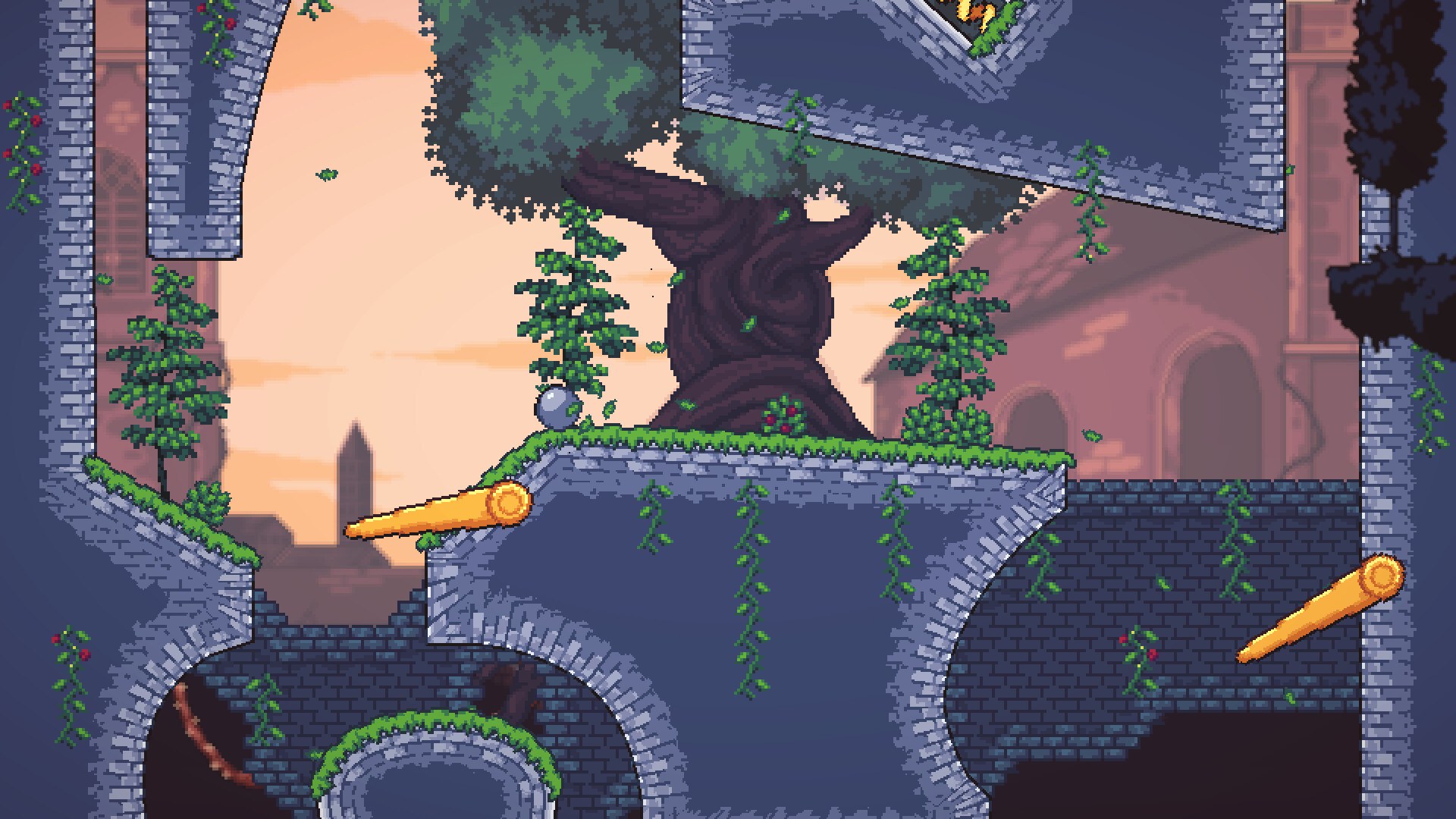
Fallosophy pinball is not a pinball game in the arcade sense: it takes the flipper physics of a pinball table and points them straight up. You use just two buttons to climb a colossal pinball table spanning the history of Western philosophy, as a lone spark of thought named Baetyl. The official site strips the genre to its bones in one line — no score, no tilts, no savers — and defines the loop as falling down and climbing back up again. If you have played Getting Over It or Jump King, this is the pinball answer to that family of games; the developer built it as a precision pinball platformer where momentum is everything.
The Two-Button Control Scheme
The entire game runs on two flipper inputs, and everything else in the control list is menu plumbing. The developer\u2019s itch.io page documents the mapping, including which button interacts with which color-coded object:
| Action | Input | Notes |
|---|---|---|
| Left flipper | A | Also interacts with blue objects |
| Right flipper | L or D | Also interacts with orange objects |
| Pause | P | Opens the pause menu |
| Confirm (menus) | A + D/L | Hold A, then press D or L |
| Feedback | F | Opens the feedback panel and QR code |
Two things are worth noting about this scheme. First, the flippers are not symmetric decoration: the blue/orange object split means the left and right buttons each answer to their own half of the table, so reading a section before committing matters. Second, full controller support is confirmed on the Steam store page, so the same two-flipper logic maps cleanly onto a gamepad. Steam versions ship for Windows.
The Three Philosophies of Motion
The developer frames flipper technique itself as the game\u2019s philosophy: blindly flipping will only send you back to the base of the world. The techniques the team names are real pinball skills repurposed for a vertical climb:
- The edge flip — force applied at the flipper\u2019s tip, where leverage is maximum, launching Baetyl at a sharper angle and higher velocity.
- The bounce — using the natural rebound angle to redirect momentum without any active flipper input.
- The cradle — timing the flipper rise to absorb rather than reflect the ball, the pinball live catch, used to hold and aim before a critical launch.
Mastering the difference between an edge flip and a flat contact is, per the developer\u2019s framing, the difference between gaining a floor and losing a long stretch of careful climbing. Nothing in the game upgrades these tools: there are no ability unlocks, so the flippers you start with are the flippers you finish with.
What the Pinball Design Removes
The minimalist label is not marketing — the developer published an explicit list of what Fallosophy is not, and it doubles as a warning before purchase:
- Not a casual pinball game. It is not about racking up points; there is no score counter at all.
- Not a Metroidvania. You will not unlock abilities or revisit earlier areas. Progress moves upward, not outward.
- Not forgiving. Falling is part of the experience, and you can lose minutes or even hours of progress in a single mistake.
- Not a power fantasy. No upgrades, no win button, no shortcuts to enlightenment.
- Not an action game. No enemies to fight or projectiles to dodge — only gravity, momentum, and your own impatience.
That removals list is also the pitch: the challenge is entirely self-contained in the physics. Each level is both physical and conceptual, with platforms that crumble like forgotten doctrines and ideas that linger in the soundscape.
The Table You Are Climbing
The vertical table is organized by the history of philosophy rather than by difficulty tiers. The launch press release and the official site describe the same structure:
| World era | Inspiration | Documented features |
|---|---|---|
| Ancient / classical | Ancient Greece and Rome, the cave of ignorance | Opening chapter of the beta and demo; the Philosopher King first appears |
| Medieval | Monastic and scholastic thought | Stained-glass style environments and new mechanical twists |
| Modern | The shattered spires of modernity | Later-era mechanics and areas beyond the demo |
| Beyond / post-modernity | Classical Antiquity through Postmodernism | The top of the climb in the full release |
The launch announcement also confirmed local co-op for the full game, with each player controlling half the flippers — a natural extension of a pinball design that was always about shared timing. A demo remains free on Steam if you want to feel the flipper physics before buying.
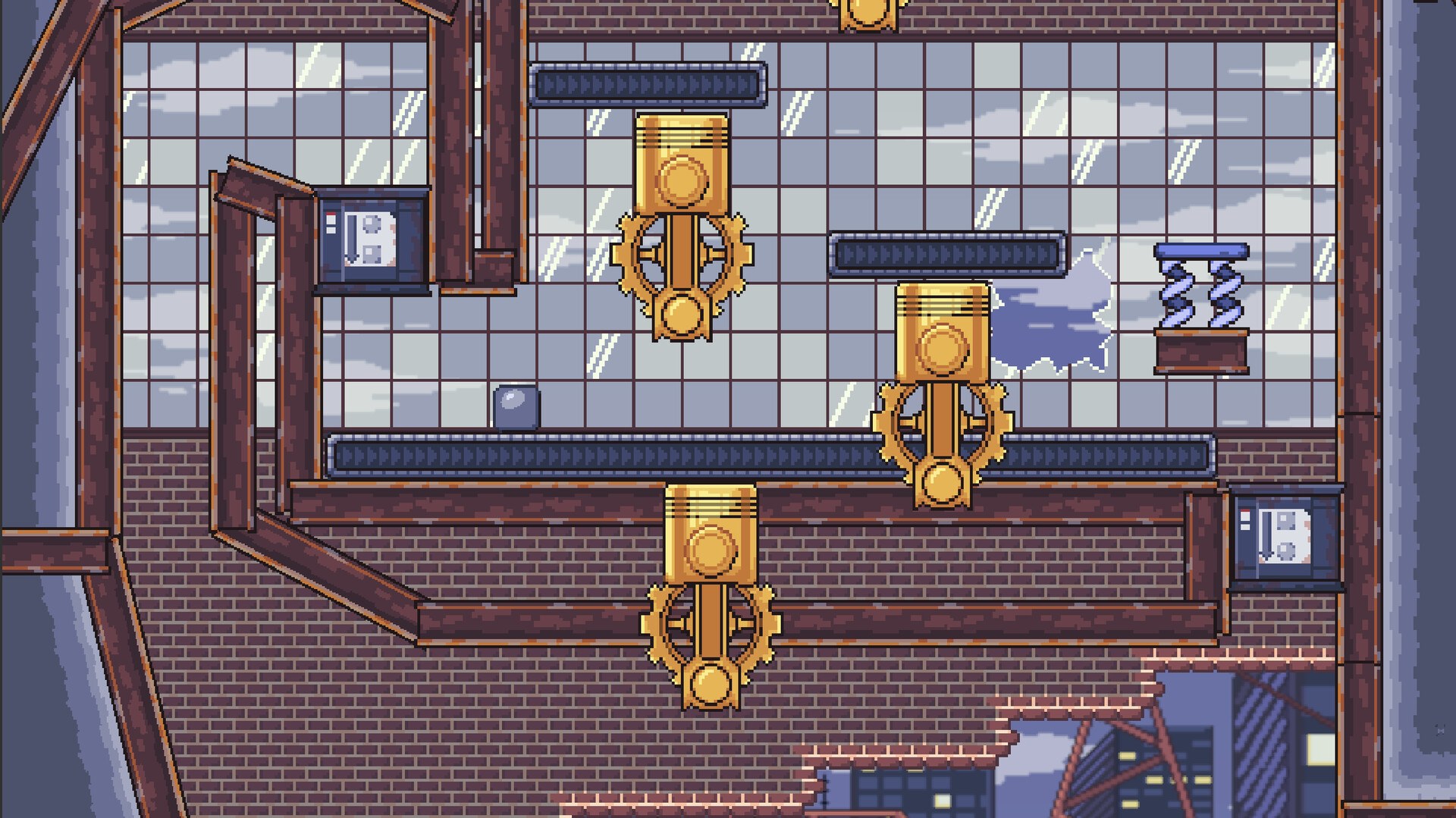
Put together, the pinball answer to what Fallosophy is becomes simple: a pinball table with every reward stripped out except height. The two buttons stay the same from the cave to the top, the physics never loosen, and the only thing the game ever asks of you is to fall, reflect, and climb again.
FAQ
- Does Fallosophy have pinball score, tilt, or savers?
- No. The official site states it plainly: no score, no tilts, no savers. The pinball design is stripped down to two flipper buttons used purely to climb, and falling down means climbing back up again.
- What are the two buttons in Fallosophy?
- The left flipper is A (also interacts with blue objects) and the right flipper is L or D (also interacts with orange objects), per the developer\u2019s itch.io page. Pause is P and the in-game feedback panel is F.
- What flipper techniques does Fallosophy use?
- Three: the edge flip (contact at the flipper tip for a sharper angle and higher velocity), the bounce (redirecting momentum without active input), and the cradle (timing the flipper rise to catch and aim the ball, like a pinball live catch).
- Is Fallosophy a casual pinball game?
- No. The developer explicitly lists what it is not: not a casual pinball game, not a Metroidvania, not an action game, and not a power fantasy. There are no upgrades, no enemies, and no shortcuts to the top.
- How many worlds does the Fallosophy pinball table span?
- The launch press release names four themed worlds, each inspired by a major philosophical tradition, running from Classical Antiquity through Postmodernism. The climb starts in the cave of ignorance and ends at the top of post-modernity.
References
- Fallosophy — Available Now on Steam (Official Site)
- Fallosophy Beta by Reliable Plumbing Services (itch.io)
- Fallosophy on Steam (Store Page)
- 【FALLOSOPHY】RAGING PINBALL GAME (YouTube)
Facts on this page are compiled from the references above. Items marked "to confirm" are single-source and not yet verified.