
Breakout Garage · Tuning · Guide
Breakout Garage Tuning Guide — How Engine and Setup Tuning Works
A Breakout Garage tuning guide to the seven setup categories, simulated thermodynamics, prepped vs no-prep leaderboard classes, and a beginner workflow.
How Tuning Works in Breakout Garage
Breakout Garage treats tuning as a core loop, not a menu afterthought. The Steam page lists simulated engine thermodynamics and airflow, and parts change real physics values: weight, aerodynamics, center of mass, engine compression ratio, displacement, and inertia. That means a Breakout Garage tuning guide cannot be a single stat sheet — the same part can land differently depending on the rest of the build. The official site frames tuning around one goal: improving your drag strip passes, with the tagline "Real Tuning Focus" covering carburetor, ignition, gearing, suspension, tires, boost, and drivetrain setup. The depth is already noticeable in Early Access: one 40-hour Steam reviewer highlighted adjusting ignition timing and carburetor mixture to eliminate engine ping as a standout, which tells you the combustion model responds to real tuning logic rather than preset numbers.
The Seven Tuning Categories
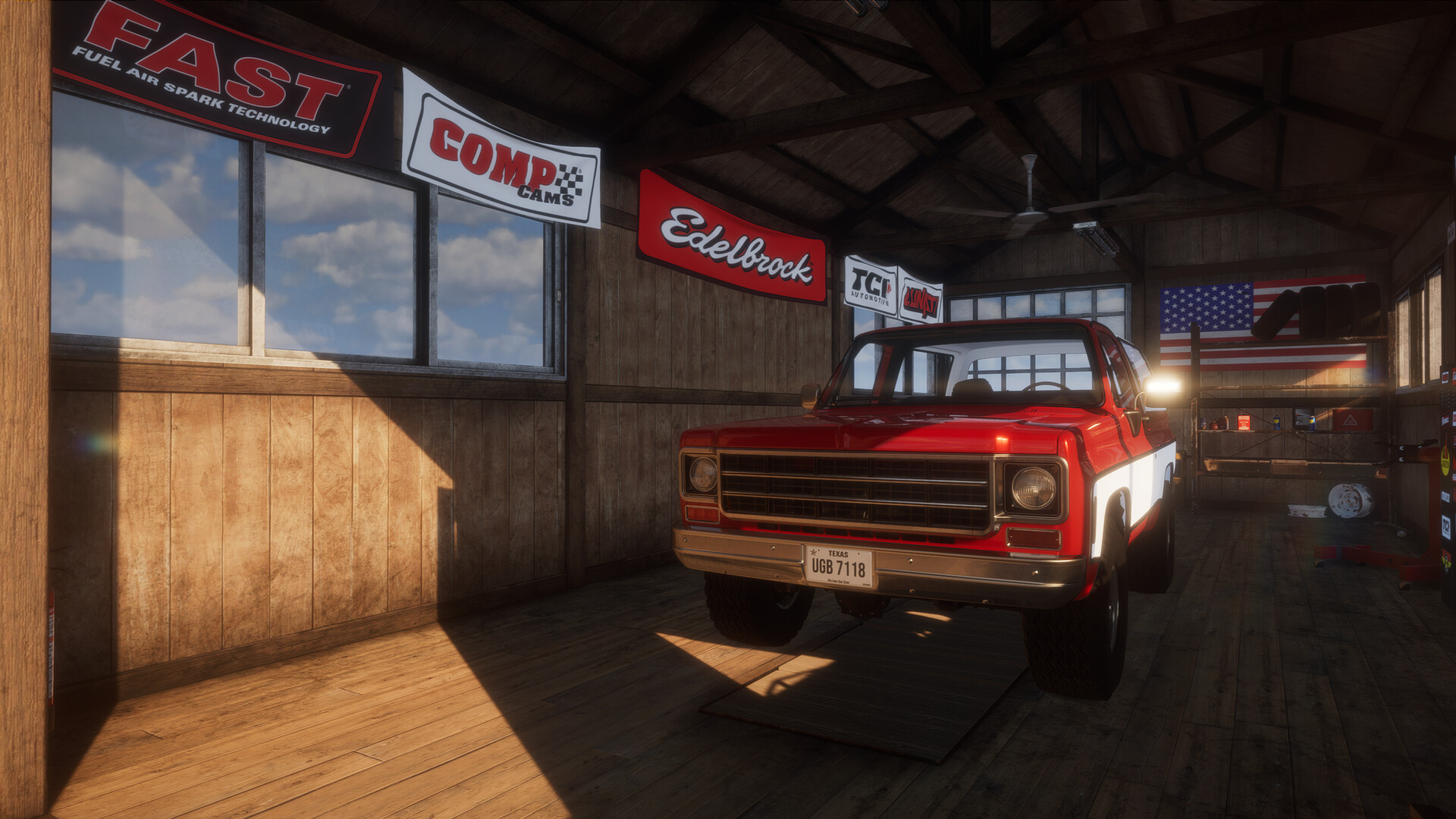
The official site breaks the system into seven categories: carburetor, ignition, gearing, suspension, tires, boost, and drivetrain.
- Carburetor and ignition — mixture control plus timing that varies with compression, boost, and fuel octane, per the Steam page; the two work together with the engine's compression.
- Gearing — shapes how power reaches the pavement on 1/4 and 1/8 mile passes.
- Suspension — determines whether that power actually hooks.
- Tires — their own tuning category, paired with the 3-type fitment system.
- Boost — interacts with octane and air-to-fuel ratio rather than acting alone.
- Drivetrain — a bigger lever since 25 September 2026, when patch V0.048 added functional 4WD for the k578 with 2 Hi and 4 Hi modes plus diff locks; transfer case position and lock behavior are now part of that truck's launch setup.
Carburetor and ignition work together with the engine's compression — the Steam page notes that ignition timing varies with compression, boost, and fuel octane, and that air-to-fuel ratio is adjustable. Gearing and drivetrain choices shape how power reaches the pavement on 1/4 and 1/8 mile passes, while suspension and tires determine whether that power actually hooks. Drivetrain became a bigger lever on 25 September 2026, when patch V0.048 added functional 4WD for the k578 with 2 Hi and 4 Hi modes plus diff locks — transfer case position and lock behavior are now part of that truck's launch setup.
Boost, Octane, and Air-Fuel Ratio
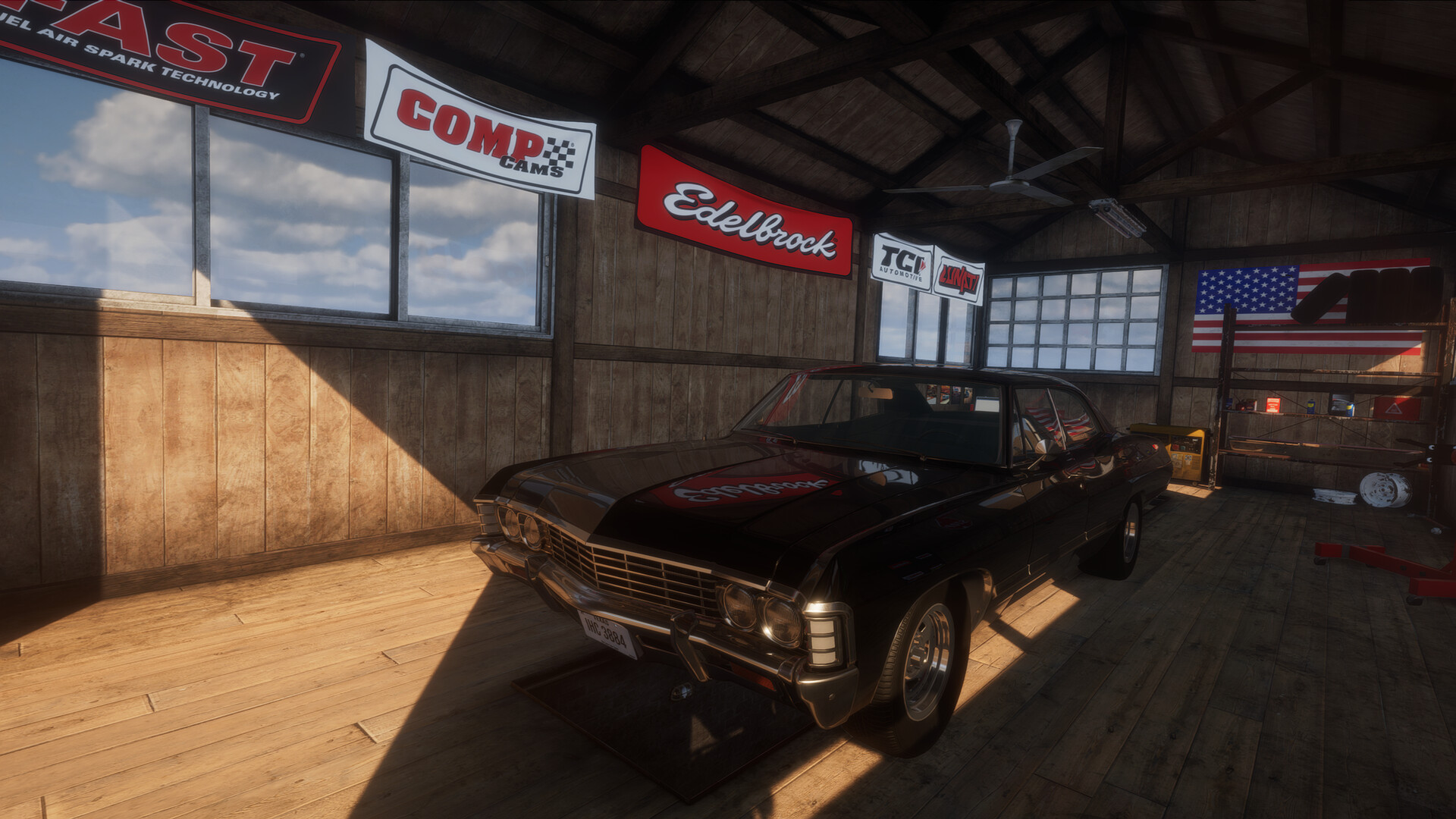
Because airflow and thermodynamics are simulated, boost pressure, fuel octane, and air-to-fuel ratio interact rather than acting as independent sliders. The Steam page's wording implies compression ratio constrains how aggressive you can be with timing and boost, which mirrors how real engine tuning works. Exact safe limits per engine have not been documented by the developers yet, so treat specific number claims from third parties as unverified — the full engine behavior is still being balanced during Early Access, and the active Steam Hub discussion about a missing ignition coil option for mechanical-distributor engines shows the part ecosystem around the combustion model is still filling in.
A Worked Example: Fuel, Dyno, Distributor, and AFR
The clearest look at how the tuning tools actually behave comes from a community tuning walkthrough (over 4,600 YouTube views, posted 26 September 2026). Everything below is that player's observed workflow and numbers on one build — a supercharged engine making 1,192 hp and 1,174 lb-ft on the dyno — so treat it as a worked example of the systems, not dev-confirmed specs.
The workflow and what each tool does:
| Step | Tool / control | What it does |
|---|---|---|
| 1. Get it running | Garage repairs | The car must run before tuning — blown rods and dead parts get fixed first |
| 2. Pick the screwdriver | Toolbox | All mixture and timing adjustments are made with the tuning screwdriver |
| 3. Check fuel | Fuel panel | The game shows regular gas (93) and E85 ethanol as fuel options |
| 4. Read the dyno | Car specifications panel | The upper-right panel opens a dyno graph of horsepower and torque |
| 5. Adjust distributor | Distributor | Sets vacuum, initial, and mechanical advance |
| 6. Adjust carburetor | Carburetor | Sets the full-throttle air-to-fuel ratio |
Details worth knowing before you touch anything:
- Fuel first. E85 needs a completely different setup — compression and all — and the walkthrough's author reports blowing an entire bottom end by switching a motor built for gas over to E85. On a gas-built motor, stay on gas.
- The in-game laptop wiki has a tuning section covering parts lists, suspension tuning, and drag racing basics, and recommends roughly 32-36 degrees of total timing at higher RPM — guidance the author says works in-game.
- The dyno graph shape is the diagnostic. Backfires, pops, or an engine slow to rev point at wrong timing; you want smooth rising curves with a clean drop at the rev limit, not jagged ones.
- Vacuum advance can be ignored for racing — it is a low-load, low-RPM fuel-economy aid, and the author reports moving it all day changes little on the dyno. What matters is initial advance plus mechanical advance, with mechanical advance coming in at a set RPM.
The distributor method the video demonstrates, one parameter at a time:
- Set the mechanical advance RPM first — a jolt or bump in the dyno graph means the advance curve is coming in wrong.
- Back the initial advance to zero, then raise it until power jumps: the author reports finding the sweet spot roughly doubles power compared with running it at zero.
- A working range he reports for 93 octane, as an example rather than a rule: initial advance around 9-10 degrees, mechanical around 14-15, total around 19-22.
- For the full-throttle AFR, small steps matter: moving from 12.25 to 12.75 on this build cost about 50 hp, and he recommends leaning only in small increments on the dyno — supercharged builds run leaner, and 14:1-15:1 was never right for the 93 fuel he ran.
Tires, Fitment, and the Leaderboard Classes
The in-depth tire and wheel system includes 3 fitment types — stretched, straight, and meaty — and tires are their own tuning category on the official site.
| Fitment type | How the Steam page documents it |
|---|---|
| Stretched | One of the 3 named fitment styles in the in-depth tire and wheel system |
| Straight | One of the 3 named fitment styles in the in-depth tire and wheel system |
| Meaty | One of the 3 named fitment styles in the in-depth tire and wheel system |
The developers have not published per-fitment performance data, so treat any "best fitment" claim from third parties as unverified. Combined with suspension and the simulated center of mass, tire choice determines how the car launches on prepped and no-prep surfaces, and the distinction matters competitively — here is how the ranked classes split:
| Class split | Surface | Ranked boards on breakoutgarage.com |
|---|---|---|
| Prepped | A treated, grippier strip | 1/8 mile prepped, 1/4 mile prepped |
| No prep | Untreated pavement, where hooking the launch is harder | 1/8 mile, 1/4 mile |
| Oval and RC | Sustained cornering and slides instead of straight-line launch | Vertex oval endurance and time attack, Vertex RC drift, endurance, and time attack |
A heavy, nose-down build and a light, rear-biased build can make identical power and still post very different slips, because weight and inertia are physically modeled.
A Practical Beginner Workflow
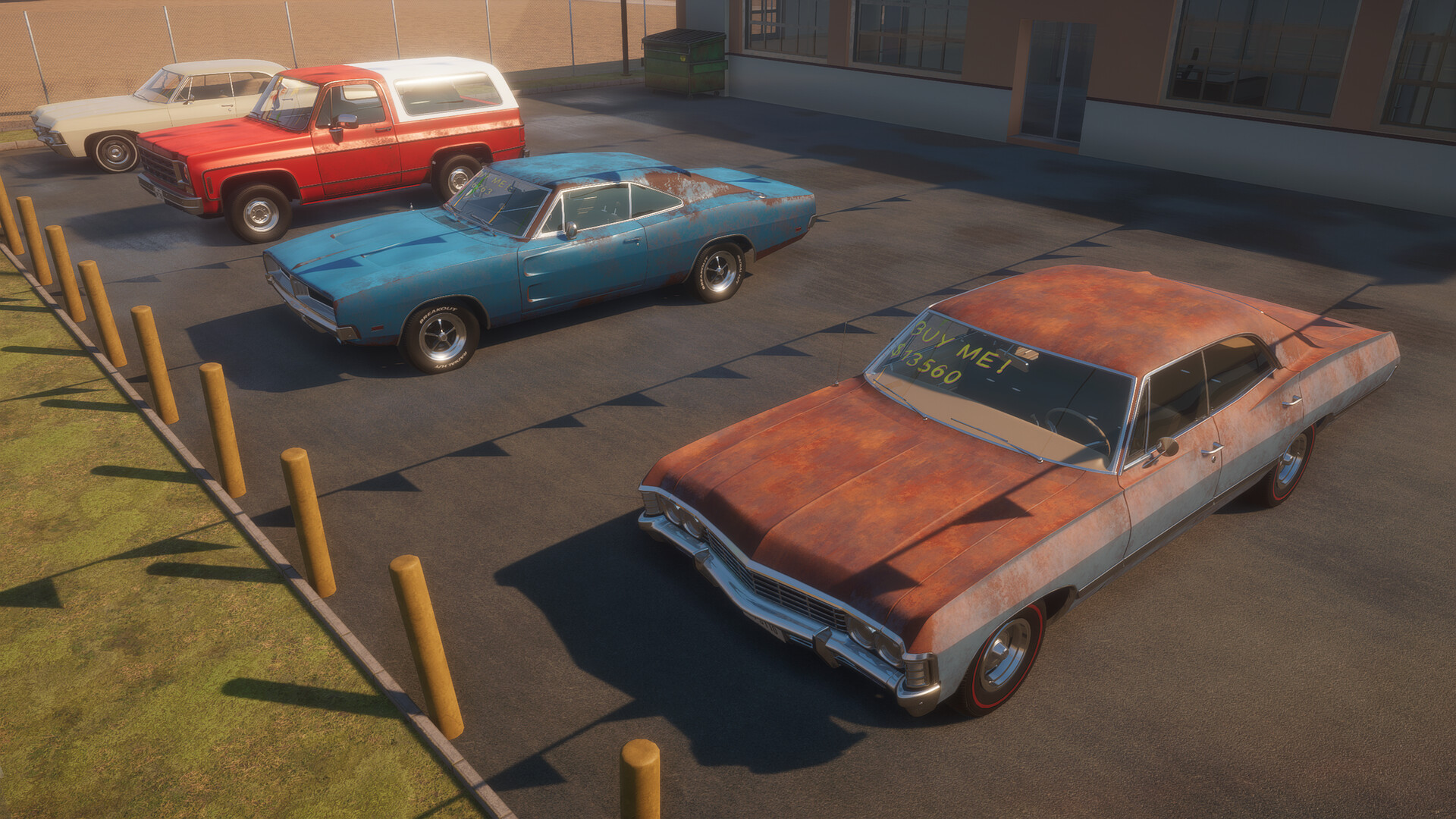
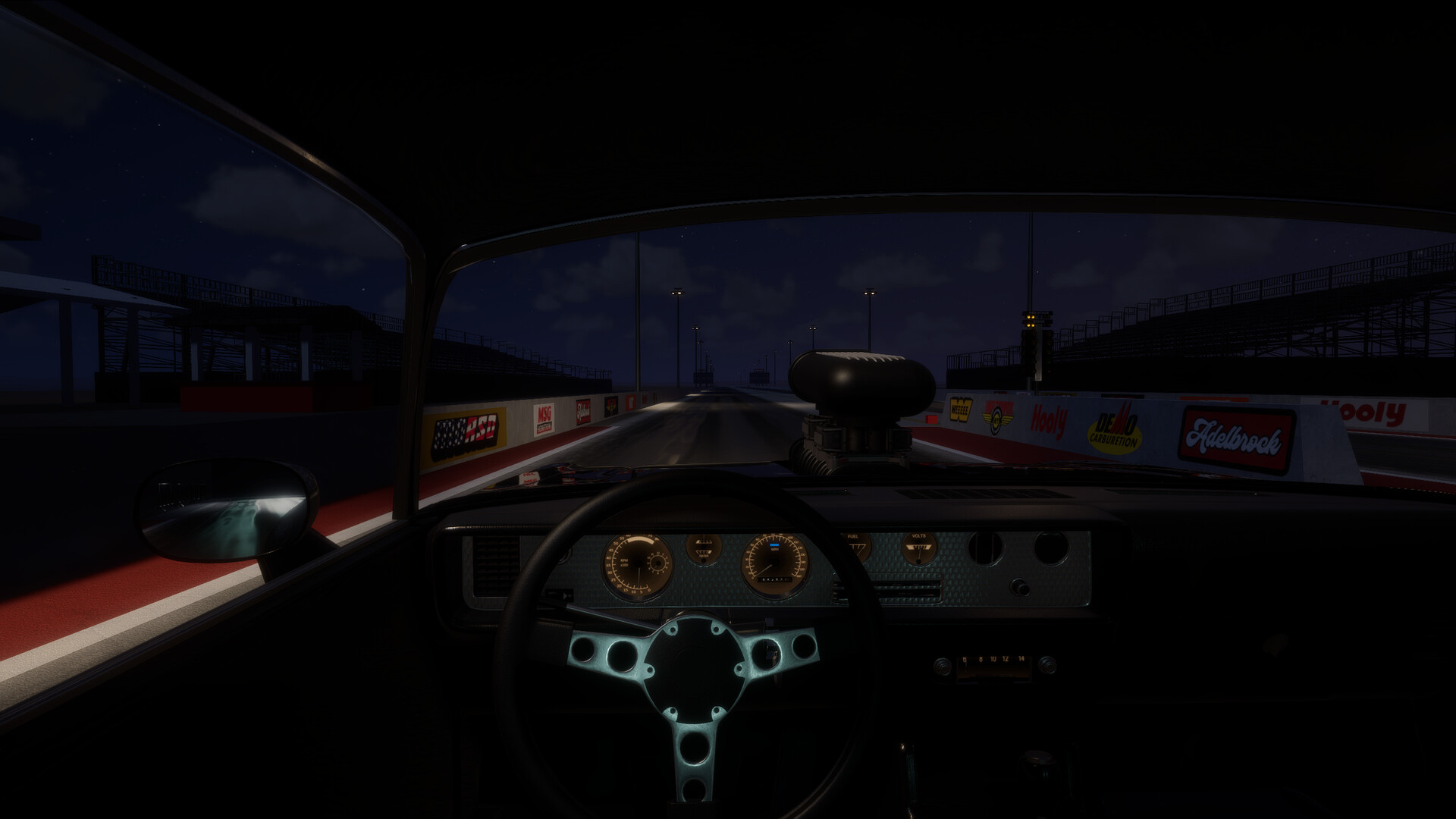
A sound Early Access workflow: buy from the used car dealer and inspect before purchase, establish a baseline pass with the driving aids on (traction control, ABS, and electronic stability control are all toggleable), then change one tuning category at a time and re-run the strip to feel the difference. Watch the wear system between runs — parts wear out and need repair or replacement, with audible indicators like lifter tick, rod knock, and worn suspension, so a tune that "went stale" may actually be a worn part. Use the in-game wiki for part and mechanic lookups, and compare your passes against the leaderboard classes on breakoutgarage.com to see where your setup stands. These are general suggestions drawn from the documented systems, not dev-confirmed optimal setups.
As a checklist:
- Buy at the used car dealer and inspect the candidate before committing cash.
- Establish a baseline pass with the driving aids on.
- Change one of the seven categories at a time and re-run the strip.
- Listen for lifter tick, rod knock, or worn suspension before blaming the tune.
- Use the in-game wiki for part and mechanic lookups.
- Compare your passes against the prepped and no-prep leaderboard classes to see where the setup stands.
FAQ
- What tuning categories does Breakout Garage have?
- The official site lists carburetor, ignition, gearing, suspension, tires, boost, and drivetrain as the seven tuning categories, all aimed at improving drag strip passes.
- Is the tuning in Breakout Garage simulated?
- Yes. The Steam page describes simulated engine thermodynamics and airflow, with in-depth tuning of air-to-fuel ratio, timing that varies with compression, boost, and fuel octane. Parts also change physics values like weight, center of mass, and inertia.
- What is the difference between prepped and no-prep leaderboards?
- They are separate ranked classes for the 1/8 and 1/4 mile boards. Prepped runs happen on a treated, grippier strip surface; no-prep runs happen on untreated pavement where hooking the launch is harder. Both are ranked separately on breakoutgarage.com.
- How does the k578's 4WD change tuning?
- Update V0.048 (25 September 2026) added functional 4WD for the k578 with 2 Hi, 4 Hi, and diff locks. Drivetrain is one of the seven tuning categories, so transfer case and diff-lock choices are now part of that vehicle's setup space.
- Is there a confirmed best tune for each car yet?
- Not confirmed yet. Early Access tuning metas are still forming, the full car list has not been fully documented at Early Access launch, and the developers have not published per-engine safe limits — treat specific number claims from third parties as unverified.
References
- Breakout Garage on Steam
- Breakout Garage — Official Site
- Breakout Garage Leaderboards
- Breakout Garage — Steam Community Hub (patch notes)
- How to Tune Your Engine in Breakout Garage | Make MORE Horsepower! — YouTube
Facts on this page are compiled from the references above. Items marked "to confirm" are single-source and not yet verified.