
Breakout Garage · Game Guides · Guide
Breakout Garage Guide — Beginner Tips & First Hours
Our Breakout Garage guide covers your first hours in Early Access: the used car dealer, tuning basics, 1/4 mile drag racing, and Steam leaderboards.
What Is Breakout Garage?
Breakout Garage is an open-world driving and racing simulator set in small-town Texas, USA, made by a two-person indie team, Breakout Studio, who also self-publish. It centers on old-school American car culture: building, tuning, and racing vehicles across street drag racing, official drag racing, and oval racing. The Steam page describes an in-depth car building system with different parts combinations per vehicle, so setups can match your preferred driving style and race type. Third-party directories such as Rob's Game Shack classify it as a first-person 3D automobile simulation. If you are looking for a Breakout Garage guide because the game feels dense on day one, that is by design — it leans closer to a simulator than an arcade racer.
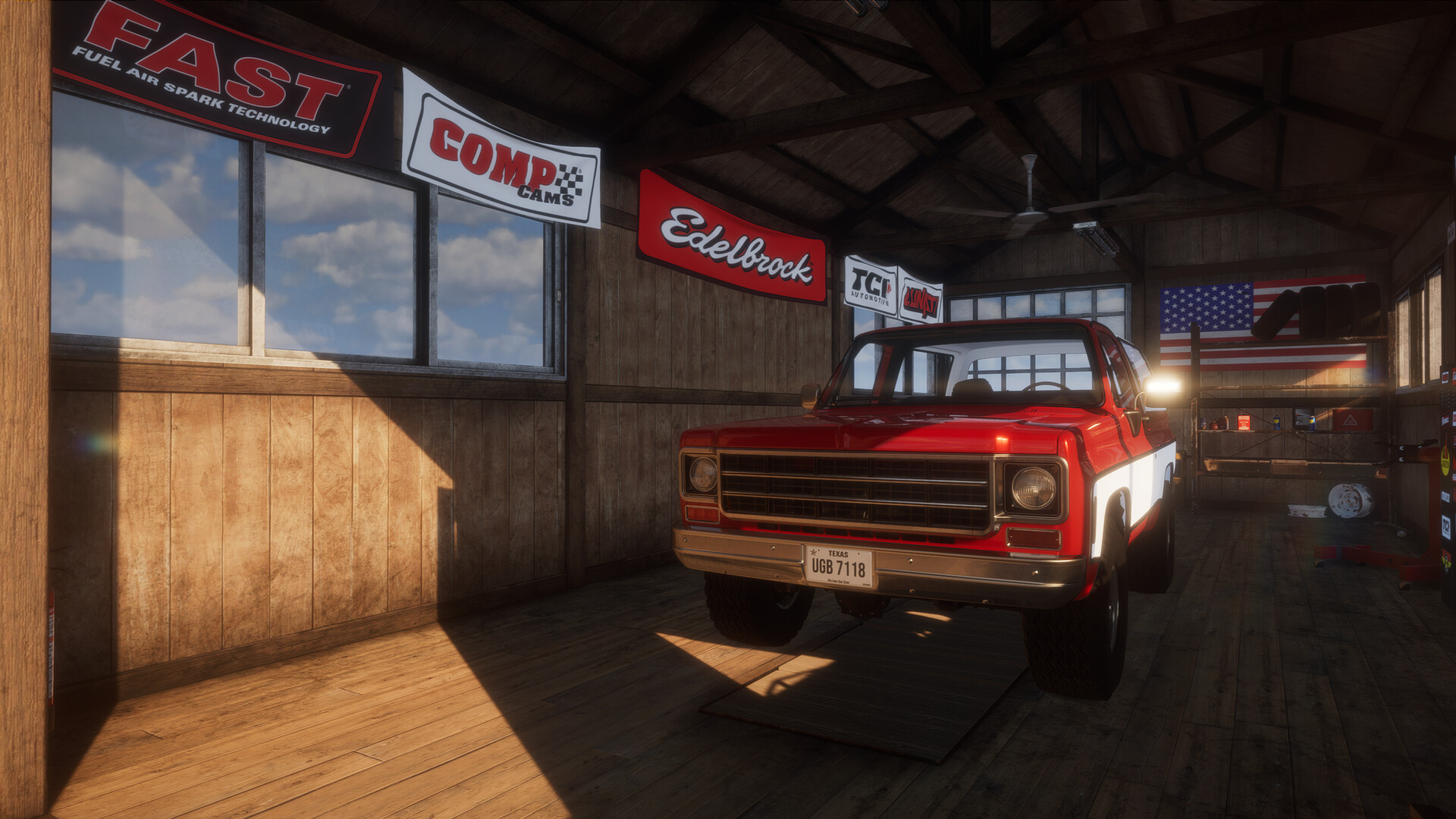
What Early Access Includes Today
The game launched into Steam Early Access on 22 September 2026, Windows only. The developers state the current build provides 5 cars, 3 engine types, and simple races, while core mechanics are already close to finished. They expect approximately 2-3 years of Early Access, with plans to expand the career, car and part selection, and map activities — including junkyards, more dealers, more shops, and dirt racing. Updates have been frequent so far: V0.047 hotfixes landed on 23-24 September and V0.048 on 25 September, the latter adding functional 4WD with 2 Hi, 4 Hi, and diff locks for the k578, improved SSR quality, and an auto-save reliability fix. The full car list has not been fully documented at Early Access launch, so expect the roster to grow.
The Early Access snapshot, in one glance:
- Launch build: 5 cars, 3 engine types, and simple races, with core mechanics described by the developers as already close to finished.
- Patch cadence: V0.047 hotfixes on 23-24 September 2026, then V0.048 on 25 September — functional 4WD for the k578 (2 Hi, 4 Hi, diff locks), improved SSR quality, and an auto-save reliability fix.
- Roadmap: roughly 2-3 years of Early Access expanding the career, car and part selection, and map activities — junkyards, more dealers, more shops, and dirt racing.
- Platform: Windows only via Steam, with English as the only supported language for interface, audio, and subtitles.
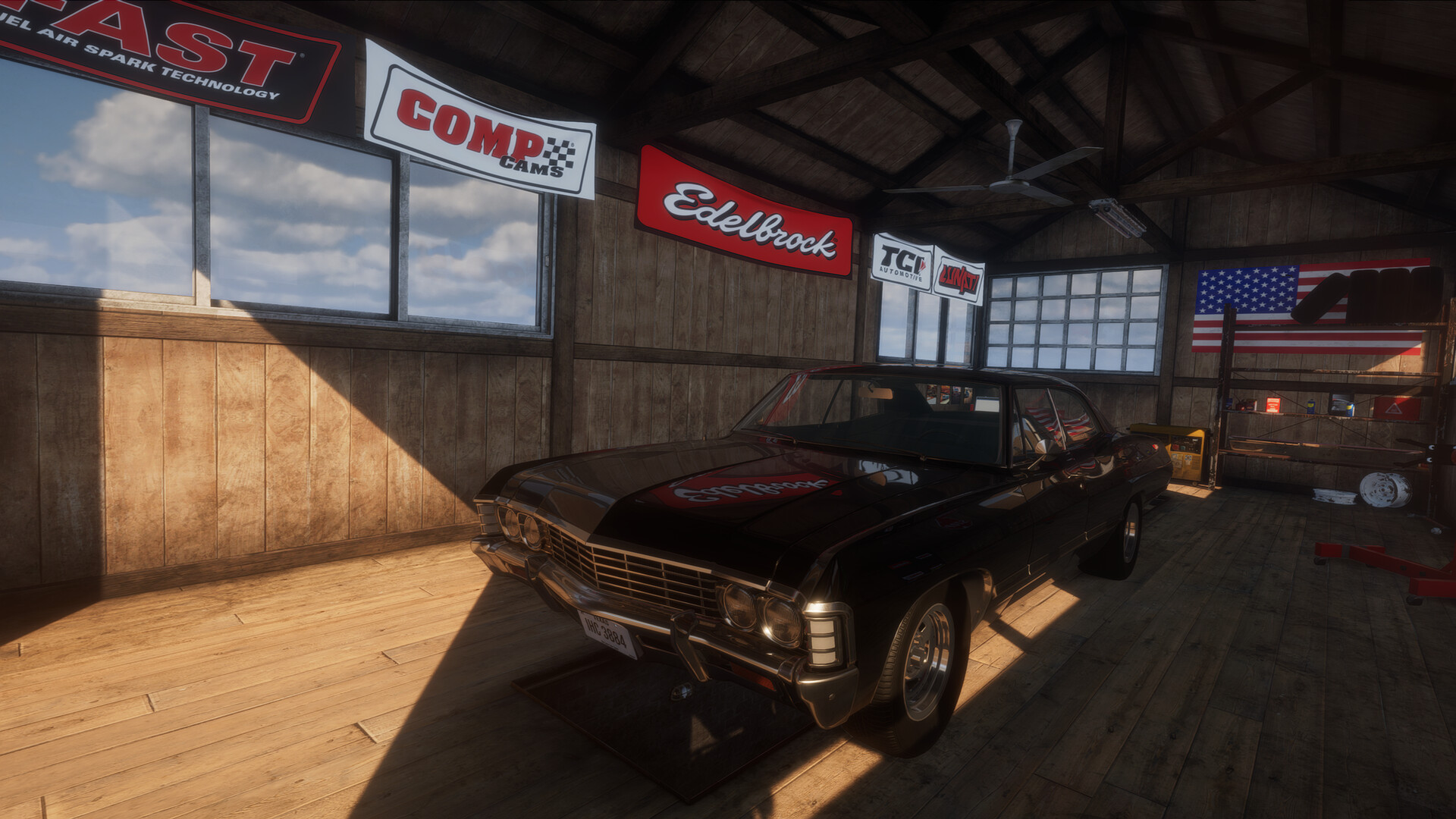
The Early Access Loop: Rebuild, Tune, Run
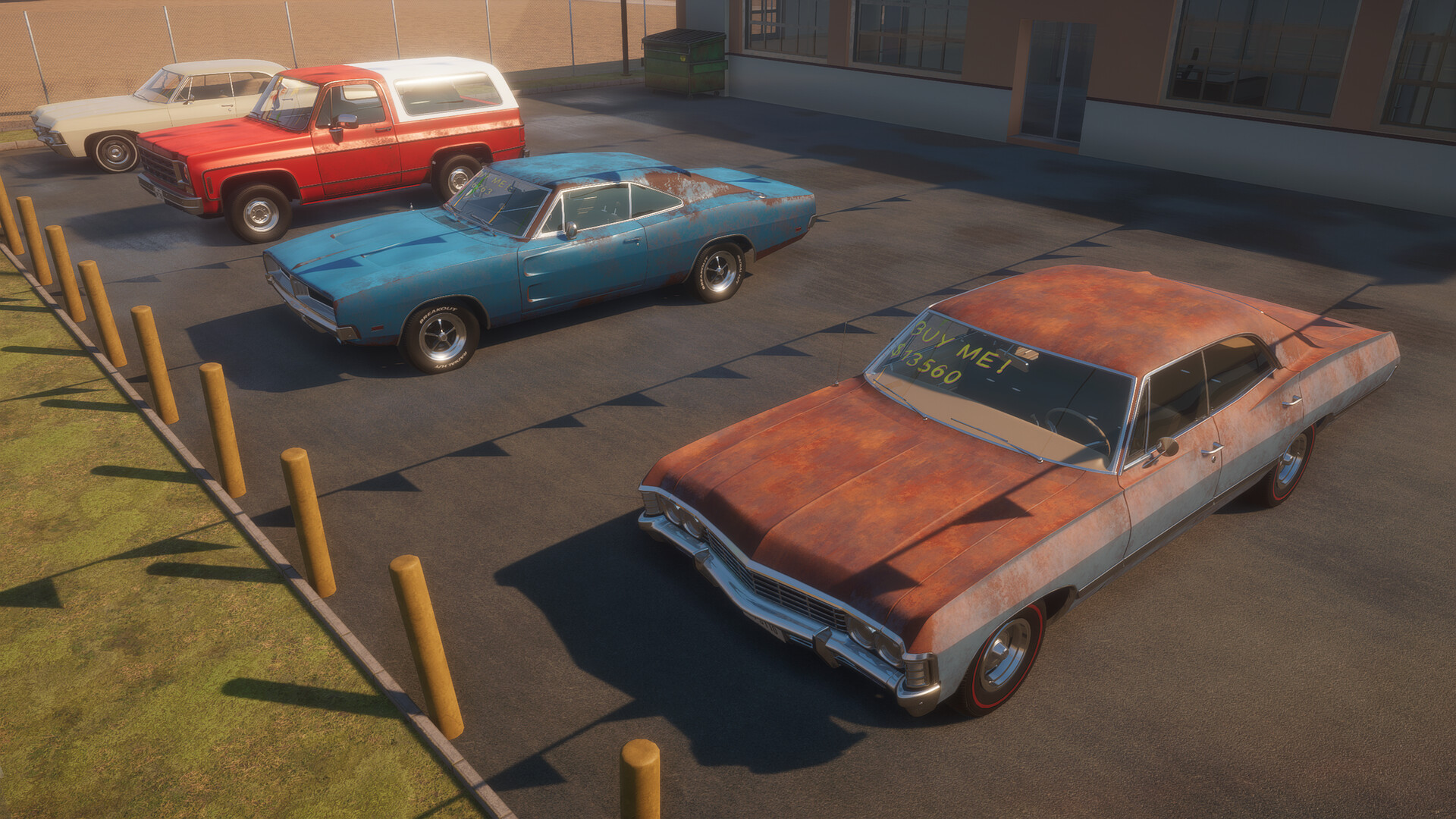
The gameplay loop the documented systems support is straightforward: buy, rebuild, tune, then run the strip. You start at the used car dealer, which stocks infinitely randomly generated cars you can inspect before buying — worth doing, since wear is simulated down to audible symptoms like lifter tick and rod knock. Once you own something, the first-person mechanic mode lets you work on it yourself, and engine swaps are supported. Then you tune: air-to-fuel ratio, ignition timing, gearing, suspension, tires, boost, and drivetrain. Finally you take the car out — accurate 1/4 and 1/8 mile drag racing with prep and no prep formats and standard or pro trees, plus drift events, time trials, and endurance racing against AI racers. Between runs, simple delivery jobs pay out based on load, distance, and delivery time, and restoring tired cars to resell them is an explicit way to fund the next build. > "Build it. Tune it. Run it."
— the tagline the official site has carried since its Coming Soon days, and a fair summary of the loop below.
The loop the documented systems support, stage by stage:
| Stage | What you actually do |
|---|---|
| Buy | Browse the used car dealer's infinitely randomly generated stock and inspect a candidate before purchase |
| Rebuild | Work on the car in first-person mechanic mode; engine swaps are supported, and wear shows up as audible symptoms like lifter tick and rod knock |
| Tune | Set air-to-fuel ratio, ignition timing, gearing, suspension, tires, boost, and drivetrain |
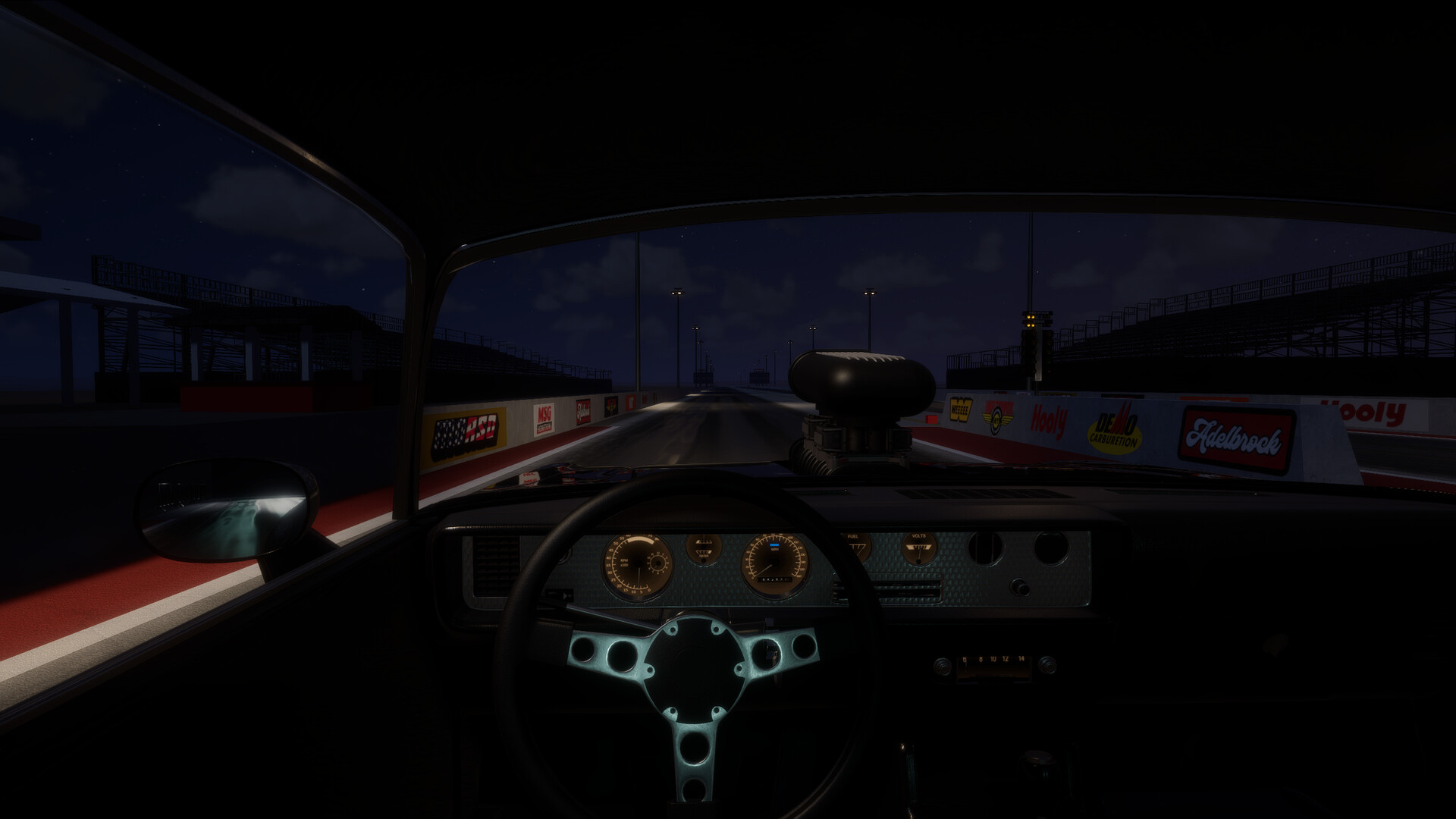
| Run | Accurate 1/4 and 1/8 mile drag racing with prep and no prep formats and standard or pro trees, plus drift events, time trials, and endurance racing against AI racers |
| Fund | Run simple delivery jobs paid by load, distance, and delivery time, or restore tired cars and resell them |
If your first session feels overwhelming, this ordering keeps it manageable:
- Inspect before you buy — the dealer's wear simulation means a cheap listing can hide expensive symptoms.
- Take whatever you buy straight to the strip for a baseline pass before touching parts.
- Change one tuning category at a time and re-run the 1/4 mile so you can feel what each change did.
- Keep a delivery job or a restore-and-resell flip going between builds so the next set of parts is always funded.
A 40-hour Steam reviewer described the loop's appeal well: adjusting timing and carburetor mixture to cure engine ping is exactly the kind of hands-on problem-solving the game is built around.
Making Money Fast: Deliveries, Racing, and Flips
Delivery jobs pay reliably, but the community consensus captured on the fan-run Breakout Garage Game Wiki is that they are slow — the wiki's economy guide explicitly calls sole reliance on deliveries a "newbie trap" that rarely funds serious engine upgrades. The motorsport complex is where the real money is: community reports collected there say oval endurance racing is the most repeatable earner, with a single lap against one opponent netting about $500 in under two minutes, and oval time trials paying out even when you finish outside the top target times. Delivery jobs remain the safe way to learn the map; racing is how builds get funded. Note the wiki's methods are community reports, not dev-confirmed payout tables — patch V0.048 even had to fix a bug that failed to apply the level multiplier to delivery payouts, so figures are moving targets.
How the wiki ranks the early income methods:
| Method | Difficulty | Estimated payout | Efficiency (per the fan wiki) |
|---|---|---|---|
| Delivery jobs | Low | Low | Poor |
| Oval time trials | Medium | Moderate to high | High |
| Drag racing (low bet) | Medium | Moderate | Medium |
| Endurance racing | High | Very high | Excellent |
Two more earning rules the wiki documents:
- Time trials pay a flat structure that rewards consistency — completing laps at all is often more profitable per hour than deliveries, even without hitting the pro target times.
- Driving aids (traction control, stability control) do not reduce payouts — if a powerful build is hard to drive, turning them on to finish laps consistently is the better economic play.
Restoring and reselling is the other documented money lever, and the wiki's car-flipping advice is blunt about where the margin lives: bodywork is the most expensive part of any restoration, so pure-profit flips should stick to performance internals — ignition systems, belts, and fuel pumps — that make the car run better, and skip expensive cosmetic repairs.
| Component | Impact on resale value | Cost | Wiki's priority |
|---|---|---|---|
| Engine internals | High | Moderate | Top |
| Tires and wheels | Medium | Low | High |
| Aerodynamics | Low | Moderate | Low |
| Body paint/shell | Negligible | Very high | Avoid |
The wiki's engine-building pitfalls worth carrying into your first build:
- Mismatched parts cost performance — the intake manifold should match the cylinder head, or you buy performance loss.
- Worn engines fail later — a high-performance engine left with rod knock or failing bearings eventually costs more than fixing it early.
- Weight is not free — sometimes stripping the interior helps lap times more than an expensive turbo, because weight is a simulated physics value.
Tuning, Physics, and Driving Aids
Parts genuinely change physics: weight, aerodynamics, center of mass, engine compression ratio, displacement, and inertia are all simulated, so a heavy nose-down build and a light rear-biased build behave differently even at identical power. Engine thermodynamics and airflow are modeled, with in-depth tuning of air-to-fuel ratio and ignition timing that varies with compression, boost, and fuel octane. If the sim physics feel punishing on keyboard or controller, toggle the driving aids — traction control, ABS, and electronic stability control are all switchable, and there is a simple damage system to keep bad launches honest. Wheels and shifters are supported as optional hardware.
How the Leaderboards Work
The official site runs a leaderboard section that pulls results directly from the official Steam leaderboards, so your in-game passes feed real rankings. Ranked boards include 1/8 mile, 1/8 mile prepped, 1/4 mile, and 1/4 mile prepped, plus Vertex oval endurance and time attack, and Vertex RC drift, endurance, and time attack. Player names, avatars, and profile links are provided by Steam.
The nine ranked boards break down like this:
| Event group | Ranked boards | What it rewards |
|---|---|---|
| 1/8 mile | 1/8 mile, 1/8 mile prepped | Short-format launch and gear setup |
| 1/4 mile | 1/4 mile, 1/4 mile prepped | The classic drag distance, prepped and no prep formats |
| Vertex oval | Vertex oval endurance, Vertex oval time attack | Sustained oval racing against the clock |
| Vertex RC | Vertex RC drift, Vertex RC endurance, Vertex RC time attack | Slides and corner-limited RC competition |
Mechanically, the board refreshes automatically every five minutes, shows 25 entries per page, and lets you filter by vehicle or search players — picking a specific car renumbers the standings within that class while still showing each driver's global Steam position.
FAQ
- What is Breakout Garage?
- An open-world driving and racing simulator set in small-town Texas, built by a 2-person team called Breakout Studio. It focuses on old-school American car culture: street drag racing, official 1/8 and 1/4 mile drag racing, oval events, and first-person garage work. Released on Steam Early Access on 22 September 2026.
- Is Breakout Garage finished?
- No. It launched into Steam Early Access on 22 September 2026, and the developers expect roughly 2-3 years of Early Access while they expand the career, car and part selection, and map activities. The launch build shipped as version V0.0xx, and three patches landed in the first three days (up to V0.048 on 25 September).
- How many cars are in Breakout Garage right now?
- The Early Access build currently provides 5 cars and 3 engine types, per the Steam page. Patch notes already reference specific builds like the k578, which gained functional 4WD in V0.048, but a complete named roster has not been published.
- Do I need a steering wheel to play?
- No. The game supports wheel and shifter hardware, but it is optional, and toggleable driving aids such as traction control, ABS, and electronic stability control help gamepad and keyboard players.
- How do the leaderboards work?
- The official site pulls results directly from the official Steam leaderboards across nine ranked boards — 1/8 and 1/4 mile in prepped and no-prep classes, plus Vertex oval and Vertex RC drift, endurance and time attack events. Rankings refresh automatically every five minutes and display 25 entries per page.
References
- Breakout Garage on Steam
- Breakout Garage — Official Site
- Breakout Garage Leaderboards
- Breakout Garage — Steam Community Hub (patch notes)
- Breakout Garage | Rob's Game Shack
- How to Earn Money Fast: Ultimate Wealth Guide — Breakout Garage Game Wiki (fan site)
Facts on this page are compiled from the references above. Items marked "to confirm" are single-source and not yet verified.