
Breakout Garage · Cars & Engines · Index
Breakout Garage Cars List — Every Vehicle in Early Access
The Breakout Garage cars list explained: 5 cars and 3 engine types at Early Access launch, the k578 4WD truck, the Blown C10, and the used car dealer.
How Many Cars Are In Breakout Garage?
Per the Steam Early Access description, the current build provides 5 cars and 3 engine types. That is the official count at launch — the full car list has not been fully documented at Early Access launch, and the developers have not published a complete named roster on the store page. Because Breakout Garage is a 2-person team's Early Access title, expect the Breakout Garage cars list to grow over time: expanding the car and part selection is an explicitly stated goal for the full version, and the Steam page's planned-content section also lists more engines, more dealers, and junkyards. Buying early therefore means locking in today's price on a roster that is scheduled to expand.
What We Can Name So Far
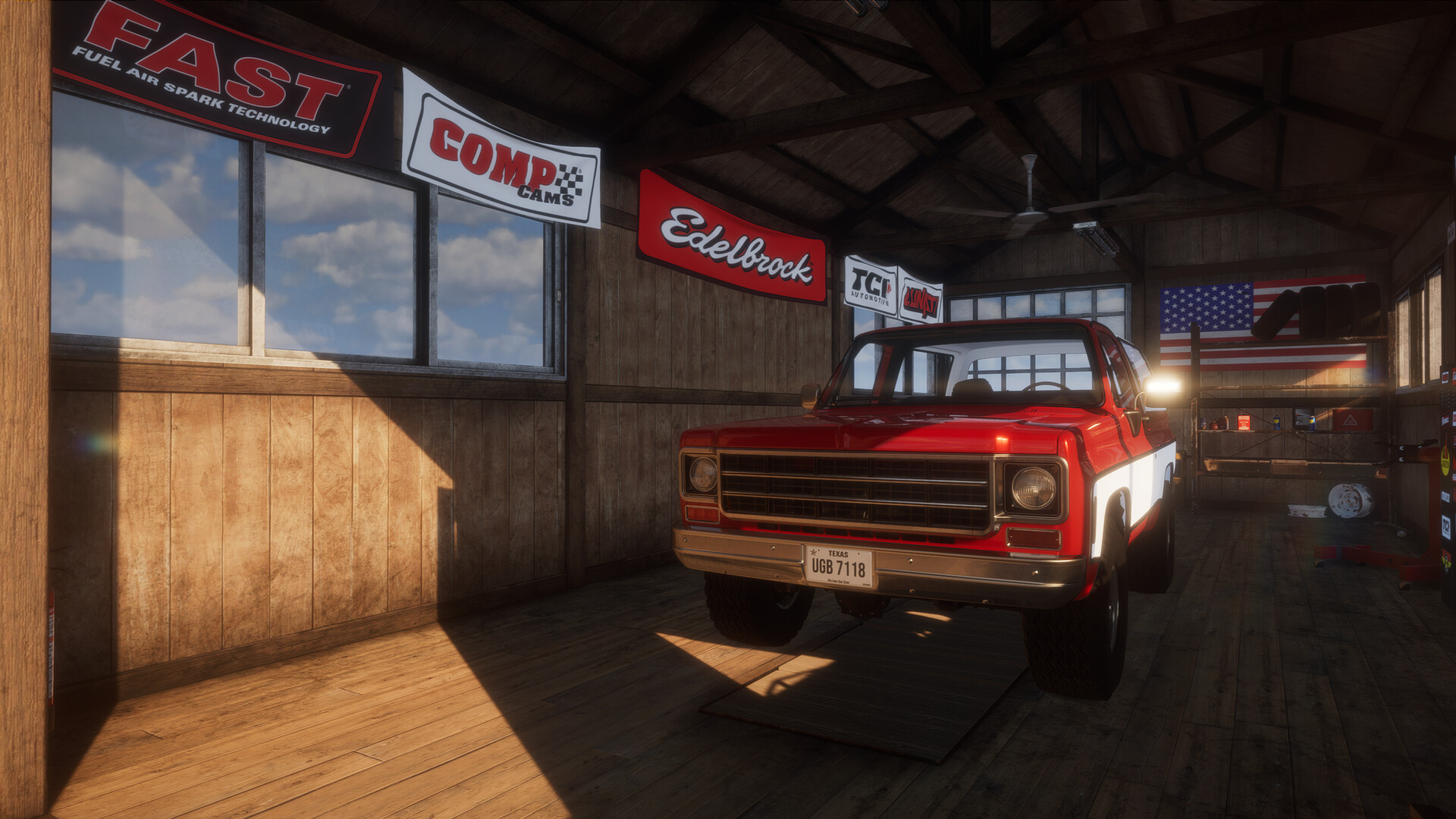
Only two vehicle identifiers exist in official material today. The official site's media captions reference a "Blown C10" — a supercharged C10-style truck that fits the 1980s Texas small-town theme (whether it is a final roster name has not been officially confirmed). The other comes from the developers' own patch notes: update V0.048, released 25 September 2026, added functional 4WD for the k578, with 2 Hi and 4 Hi modes plus diff locks. Those two names are all that is documented; community discussion on the Steam Hub has already asked whether the game is GM/Chevy-only and requested additions like a Fox Body Mustang, but no such cars have been announced. Treat any third-party "complete list" claims with caution — everything else in the 5-car roster is unnamed in public material.
Every vehicle identifier that official material documents today:
| Entry | What it is | Source and status |
|---|---|---|
| 5 cars | The official roster count at Early Access launch | Steam page — confirmed |
| 3 engine types | The official engine count at launch | Steam page — confirmed |
| k578 | Gained functional 4WD (2 Hi, 4 Hi, diff locks) | V0.048 patch notes, 25 September 2026 — confirmed |
| Blown C10 | A supercharged C10-style truck fitting the 1980s Texas small-town theme | Official site media caption — roster-name status not officially confirmed |
What is still not documented, stated plainly:
- A complete named roster for the 5-car lineup — no official list has been published.
- Whether "Blown C10" is a final roster name or a media caption.
- Per-car specifications, engine pairings, or performance numbers.
- Any of the community-requested additions (such as a Fox Body Mustang raised on the Steam Hub) — none have been announced.
Engines and Engine Swaps
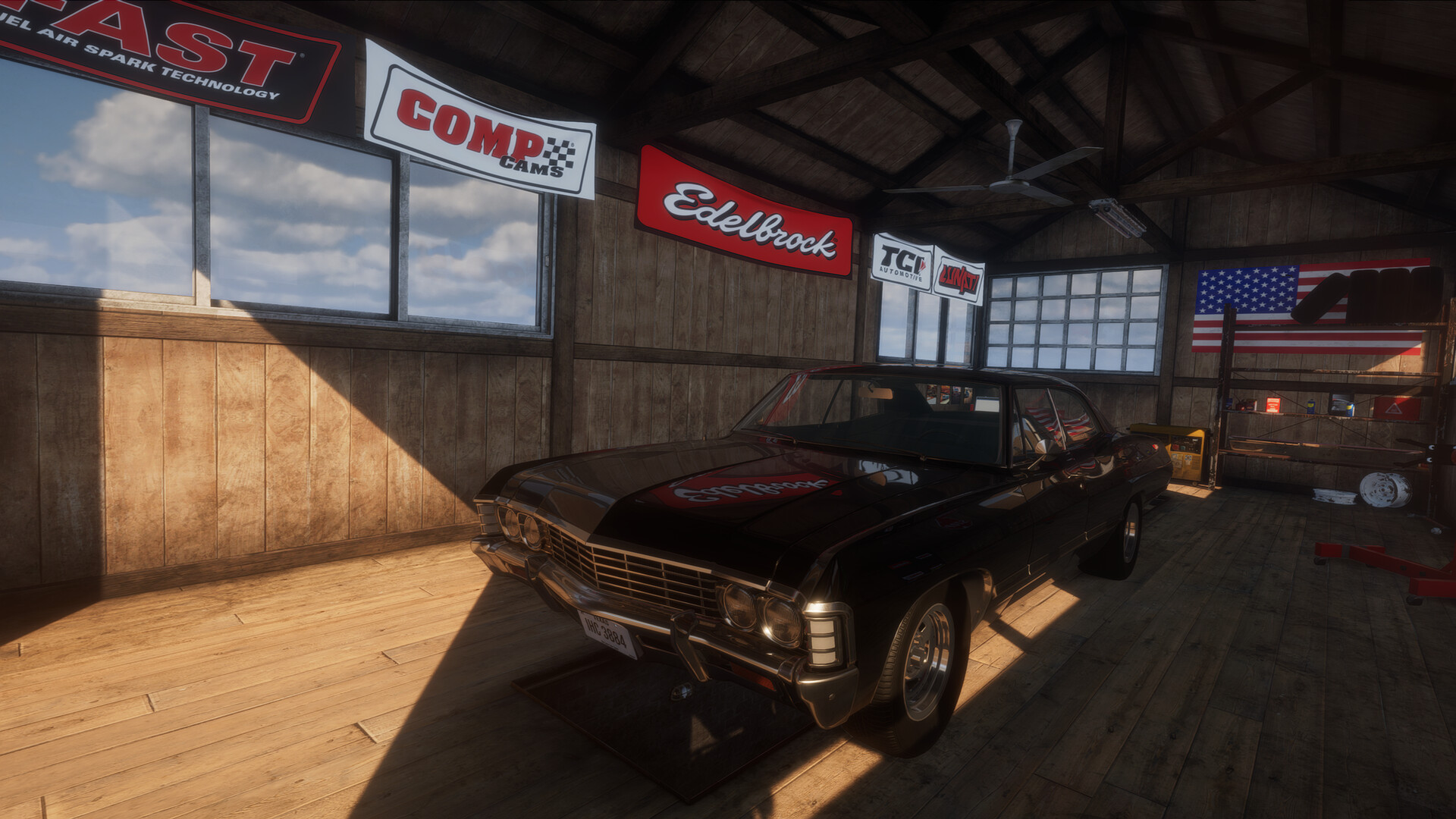
Three engine types are in the game at Early Access launch, and engine swaps are a listed feature, so a chassis is not locked to one powerplant forever. The simulation is deep here: engine thermodynamics and airflow are modeled, and tuning covers air-to-fuel ratio, ignition timing that varies with compression, boost, and fuel octane. Parts affect real physics values too — weight, aerodynamics, center of mass, engine compression ratio, displacement, and inertia. Steam Hub players have noted gaps as they push the systems — one active discussion asks why there is no ignition coil option for mechanical-distributor engines — which shows how granular the part-level simulation already is at this stage.
What the engine side documents today:
- 3 engine types ship in the Early Access build, per the Steam page.
- Engine swaps are a listed feature, so a chassis is not locked to one powerplant forever.
- Engine thermodynamics and airflow are simulated.
- Tuning covers air-to-fuel ratio, plus ignition timing that varies with compression, boost, and fuel octane.
- Parts change real physics values: weight, aerodynamics, center of mass, compression ratio, displacement, and inertia.
How to Get Cars: The Used Car Dealer
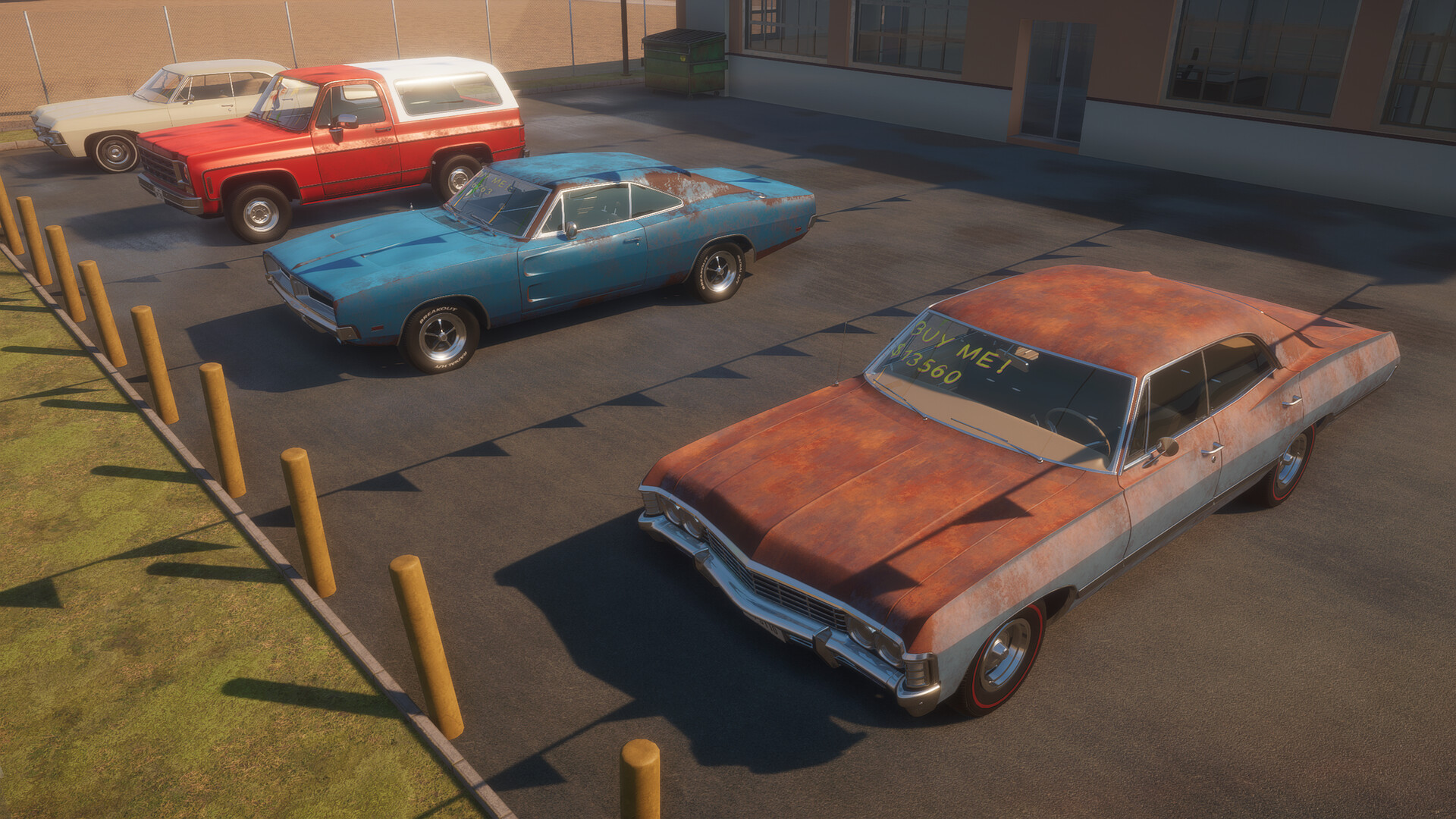
You buy cars through the used car dealer, which stocks infinitely randomly generated cars. Every listing can be inspected before purchase, so check a candidate thoroughly before committing your cash — the wear and tear system simulates parts that need repair or replacement, with audible indicators like lifter tick and rod knock that a tired seller's car can hide. The economy is described as realistic on the Steam page, and the restore-and-sell loop — buying tired cars, fixing them, and flipping them for profit — is an explicit feature alongside the simple delivery job system (payouts depend on load, distance, and delivery time) as ways to fund your next build. Planned content includes more dealers and junkyards, which should widen the sourcing options over Early Access.
The documented ways to fund a build:
| Route | How it works |
|---|---|
| Used car dealer | Infinitely randomly generated listings, each inspectable before purchase |
| Restore and sell | Buy tired cars, repair the worn parts, flip them for profit — an explicit feature |
| Delivery jobs | Simple jobs with payouts based on load, distance, and delivery time |
| Oval and road-course racing | Flat cash payouts per run even below the top target times, per a well-watched community playthrough |
Inspection matters because the wear and tear system simulates parts that need repair or replacement, with audible indicators like lifter tick and rod knock that a tired seller's car can hide — the economy is described as realistic on the Steam page.
What a Real Flip Looks Like in a Community Run
Because no official price list exists, the clearest picture of the used-car economy comes from a popular community playthrough (over 72,000 YouTube views, posted 24 August 2026) that bought a rusty inline-6 with a 3-speed manual for $9,000 out of a $10,000 starting budget, repaired it part by part, and flipped it. These are one player's observed numbers in one save — treat them as worked examples of the pricing order of magnitude, not a documented price table.
| Repair or part (as observed in that run) | Observed cost |
|---|---|
| Airbox | $13 |
| Accessory belt (part shop) | $20 |
| Spark plug wires (part shop) | $30 |
| Exhaust manifold | $38 |
| Oil pan | $49 |
| Connecting rods | $74 |
| Camshaft repair | $88 |
| Engine block repair | $102 |
| Driveshaft | ~$300 |
| Full body repair (avoided) | ~$11,000 |
| Net profit on the finished flip | ~$600 |
Mechanics the same run documents about buying and rebuilding:
- Replacement parts come from an in-game part shop and install with one click — no manual assembly minigame — and removed old parts can be sold back for small amounts (cents to a few dollars).
- Weight reduction is seat removal: taking out the passenger and rear seats cut weight for racing, and had to be reversed before the car was sold.
- Full bodywork dwarfs mechanical repairs — an ~$11,000 body quote on a $9,000 car is why the community flip advice targets engine internals instead of cosmetics.
- The car went onto visible jack stands when wheels came off — small garage-realism touches accompany the first-person mechanic mode.
Parts, Tires, and Brand Ecosystem
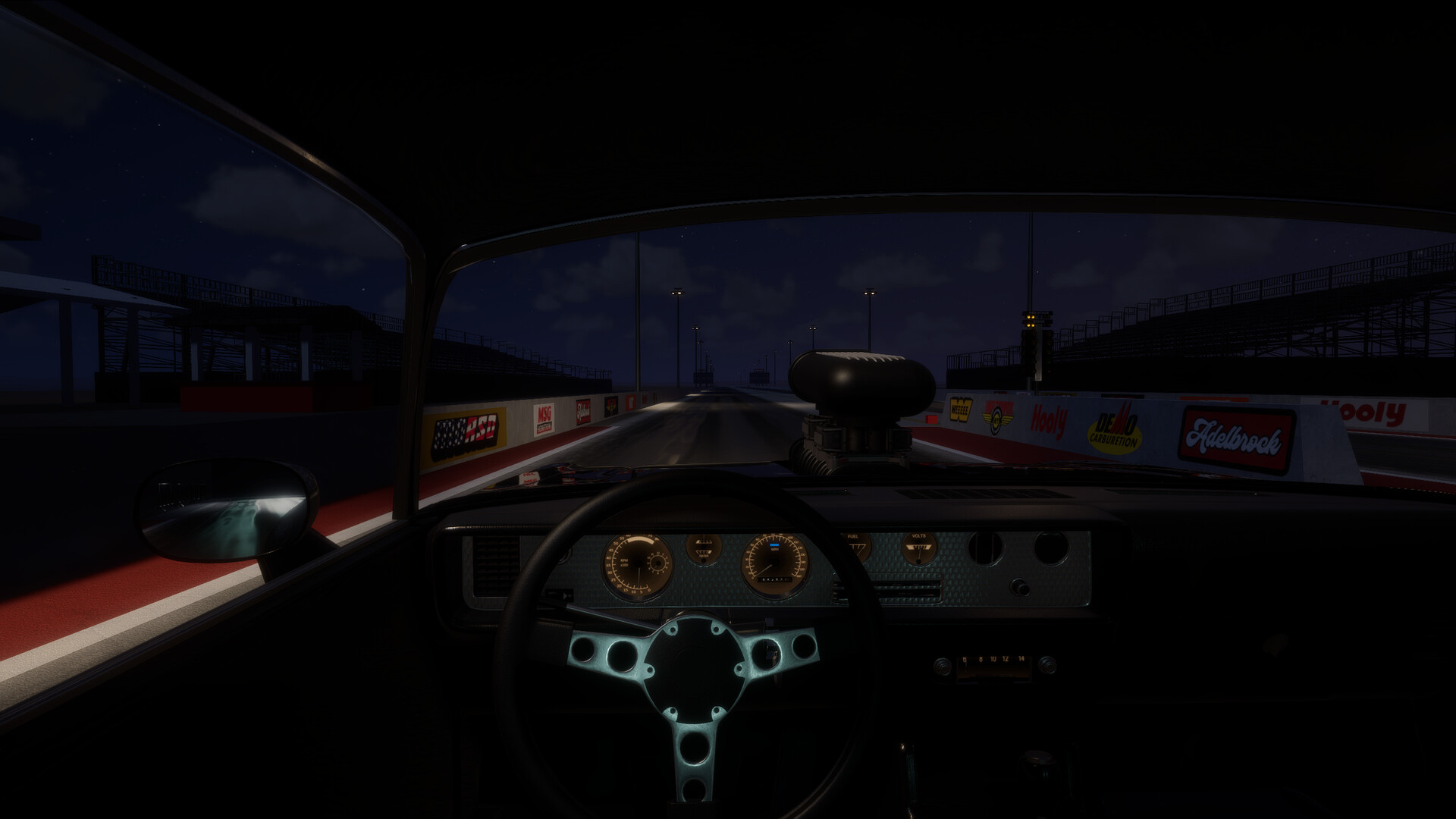
Building a car goes beyond the engine. The game features an in-depth tire and wheel system with 3 fitment types — stretched, straight, and meaty tires — paint wear including faded paint, edge rust, and patina, a decal system with interior and window stickers, and parts from 14+ real-life aftermarket brands. Cosmetic and performance customization are both listed on the Steam page, and there is an in-game wiki for looking up parts and mechanics without leaving the game. Every one of these choices feeds the physics simulation rather than being pure dress-up, which is why the leaderboard classes on breakoutgarage.com filter by vehicle — the same event ranks differently per car.
The same community playthrough shows how those categories look in the garage, with the caveat again that these are one player's observations:
| Part category | What the community run shows |
|---|---|
| Tire types | Street tires, drag radials, semi-slick racing tires, and an all-terrain option available in the tire shop |
| Tire sizes | Carried sizes are shown on the car (a 15x7 / R15 example) and are configurable per fitment |
| Aero bolt-ons | Spoiler, front splitter, fender vents, and a rear wing — the wing sits in a fixed position and is not adjustable |
| Hood options | A cut hood variant exists for engines poking out of the bay |
| Engine bolt-ons | Turbocharger with boost adjustments, a four-barrel carburetor upgrade, and an ignition box with launch control |
| Crate motors | OEM and performance crate motors with listed horsepower ratings, with the SBC named as having the most crate options |
FAQ
- How many cars are in Breakout Garage?
- The Early Access build currently includes 5 cars and 3 engine types, according to the Steam page. The full car list has not been fully documented at Early Access launch, and patch notes reference specific builds like the k578 rather than a published roster.
- What kind of cars are in Breakout Garage?
- Old-school American builds. The official site showcases classic-style American vehicles and media captions have shown a Blown C10 truck, and the V0.048 patch notes name a k578 that gained functional 4WD. A complete official roster has not been published.
- Can you swap engines in Breakout Garage?
- Yes. Engine swaps are listed as a feature on the Steam page, and the game currently offers 3 engine types, with simulated thermodynamics and airflow plus tuning of air-to-fuel ratio and ignition timing.
- How do you buy cars in Breakout Garage?
- Through the used car dealer, which offers infinitely randomly generated cars that you can inspect before purchase. You can also restore and sell cars for profit to fund the next build.
- Will more cars be added?
- Yes. The developers plan to expand the car and part selection over the roughly 2-3 years of Early Access, alongside more dealers and junkyards, and the price will rise as content is added.
References
- Breakout Garage on Steam
- Breakout Garage — Official Site
- Breakout Garage — Steam Community Hub (patch notes)
- Breakout Garage Leaderboards
- I Rebuilt My Race Car's Engine to Win Cash! (Breakout Garage) — YouTube
Facts on this page are compiled from the references above. Items marked "to confirm" are single-source and not yet verified.