
Used Cars Simulator · Game Guides · Guide
Used Cars Simulator How To Play
Used Cars Simulator how to play, step by step: find a good offer, check the car, negotiate, fix dents and missing parts, then list it and upgrade the garage.
Used Cars Simulator is played as a repeatable buy-fix-sell loop rather than a linear campaign. The store page lays out the order directly: find a good offer, check the car's condition, negotiate the price, and buy it; then fix the dents, order and install missing parts, wash the car, repaint it, and put it up for sale. It released on Steam for Windows on 9 October 2026 at $11.99 and is single-player only. This page walks that loop in the order the game asks you to do it, and marks clearly where the official documentation stops.
Start Here: What the Game Asks You to Do
The store page's own summary of the game is the shortest accurate answer: trade used or stolen cars, fix and customize them, drive around, and explore the open world, then grow your business, complete quests, and have fun with a physics-based sandbox. It even sets the starting tone, welcoming players who have little money and nothing to lose, and opening the story with a meeting at your favourite bar. That framing tells you what the first hour should feel like: cheap cars, small margins, and a shed you are slowly growing out of.
| Feature the store page lists | What it means in play |
|---|---|
| Car Trading and Flipping | The core loop: buy low, repair, sell higher |
| Story and Quests | A narrative thread with quest objectives |
| Physics and Sandbox | Cars behave physically; you can mess about as you like |
| Illegal Activities | Documented as a feature, methods not specified |
| Police Interactions | A police system exists, consequences not specified |
| World Exploration | An open world including an abandoned city and desert |
| Upgrades and Economy | Your business and garage grow over time |
Everything in that table is a named key feature on the Steam listing. What the listing does not provide is any of the numbers behind them: no prices, no part costs, no sale values and no upgrade tiers. If you see a specific figure quoted for any of these elsewhere, it is not coming from the developer's own store copy.
Step 1 to Step 3: Find, Check, Negotiate
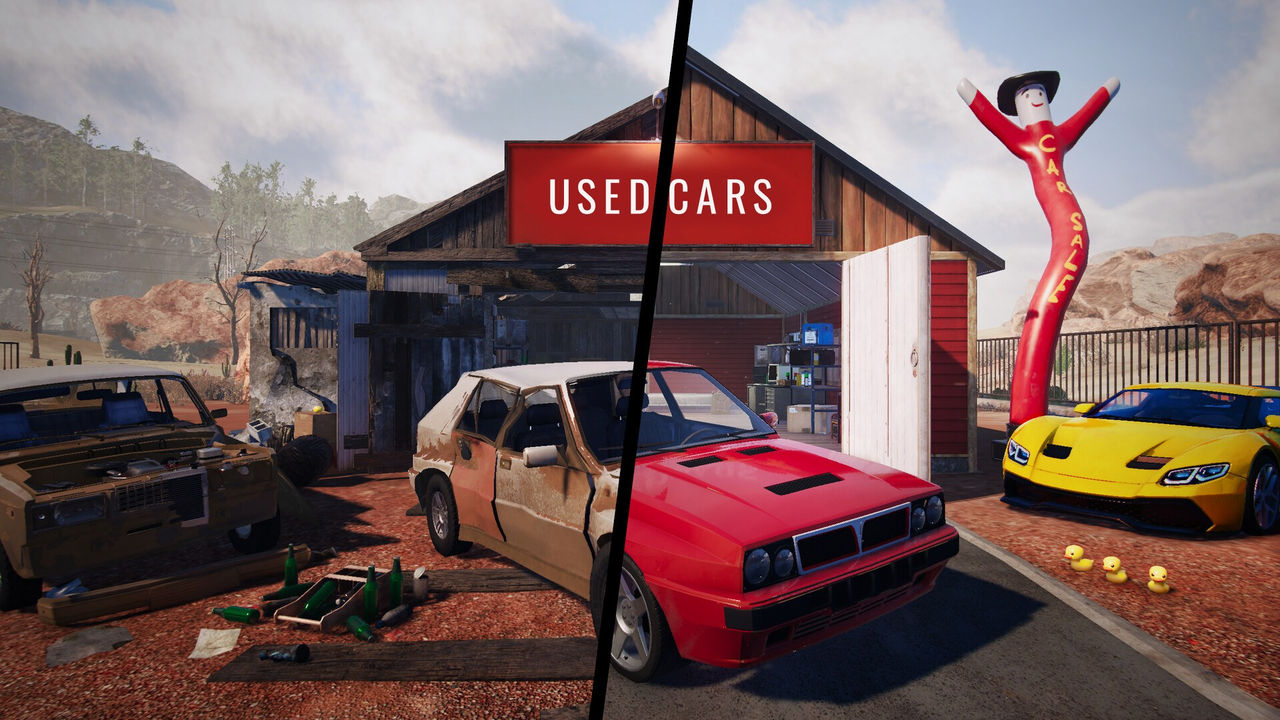
The first stage on the store page is titled FIND A GOOD OFFER, and it contains three actions in a deliberate order. You check the car's condition, you negotiate the price, and if everything looks good, you buy it. Reading the condition first is the point: the inspection is what gives you the leverage to negotiate, and it is also what tells you how much the repair stage is going to cost you on top of the purchase price.
- Check the condition before you look at the price, because damage and missing parts become your costs after the sale.
- Negotiate the price, since the store page treats the asking figure as a starting point rather than a fixed one.
- Only buy if everything looks good, which is the store page's own condition for proceeding.
- Expect the first car to be a cheap one, because the game opens by welcoming players with little money.
The store page also states plainly that there are many ways to get cars and asks whether they are all legal, answering that they are as long as the cops do not catch you. Combined with Police Interactions in the feature list, that confirms a riskier alternative route exists. It does not describe how that route works, how the police respond, or what you lose if you are caught, so all of that is not documented yet.
Step 4: Fix the Car
The second named stage is FIX THE CAR, and the store page lists four jobs in order: fix the dents, order and install missing parts, wash the car, and repaint it. The order is worth following as written, because the two structural jobs come before the two cosmetic ones, and the instruction to order parts implies you are buying them rather than salvaging them. Once all four are done, the car goes up for sale.
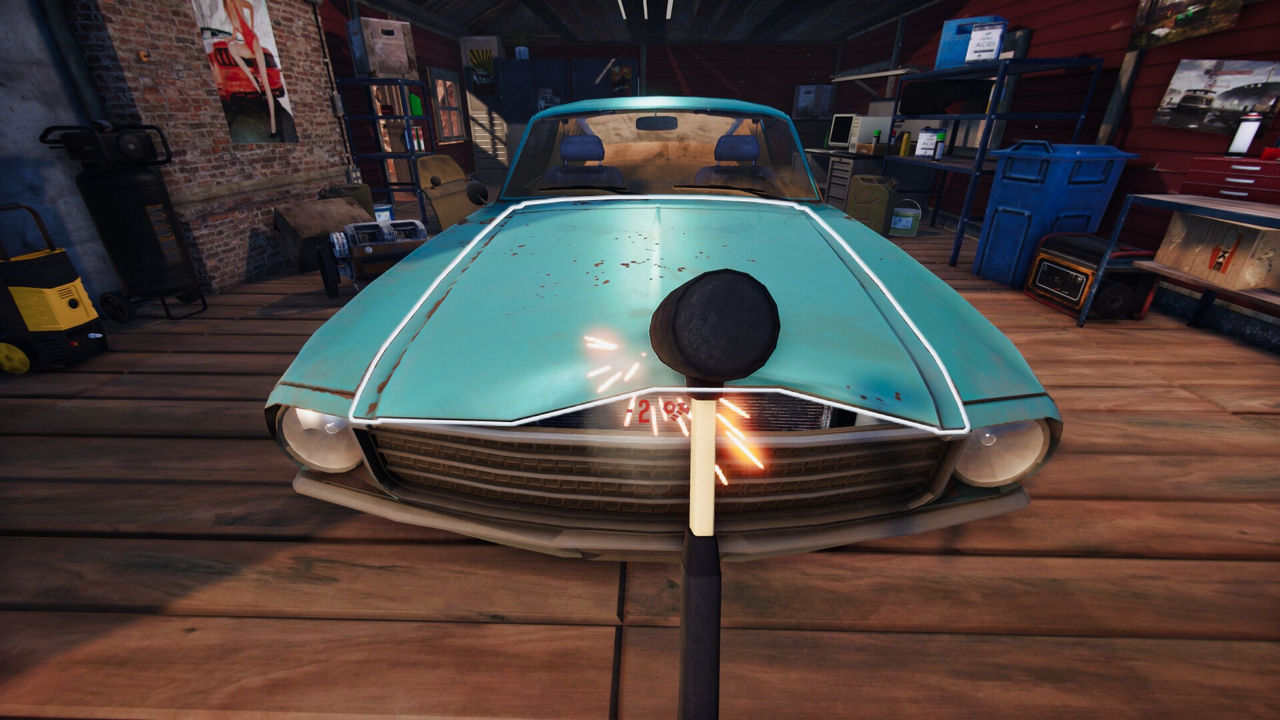
The store page does not say what any of those four jobs costs, whether you can skip one, or whether a buyer pays more for a fully repainted car than a merely washed one. Those are all not documented yet. The repair page goes into each job individually, and the cars page covers what the store page says about where vehicles come from, including the tow truck and the metal detector.
Step 5 and Step 6: Sell, Then Grow the Garage
Selling closes the loop: you put the car up for sale and the profit funds the next, better purchase. The store page's Upgrades and Economy feature, plus its line about growing your business in an old shed, tells you that the shed itself is part of the progression rather than fixed scenery. Two achievement names back that up: Reach Level 2 and Reach Level 5 sit alongside the cash milestones from Have $10,000 In Cash up to Have $1,000,000 In Cash, so both your level and your bank balance are being tracked as you scale.
- Sell the repaired car to recover your purchase price plus the parts and paint you put in.
- Reinvest in a better car, since the loop only compounds if the next purchase is stronger than the last.
- Grow the business and the shed, which the store page names as part of the economy feature.
- Watch your level as well as your cash, because Reach Level 2 and Reach Level 5 are separate milestones.
Between sales, the store page lists world exploration as its own feature, and its long description mentions driving around an abandoned city, drinking beer, and wandering the desert with a metal detector. The metal detector is worth noting because it appears again in the achievement list as Find All 3 Rubber Ducks, which is the one clearly collectible-flavoured goal the store page publishes.
Between Jobs: Quests, Exploration, and Fun
Used Cars Simulator is not purely a money machine. The store page lists Story and Quests, Physics and Sandbox, and World Exploration as separate features from the trading loop, and its own description of downtime is to drift, jump, and compare your scores with other players on the leaderboards. That last part is the one competitive element documented anywhere: Steam Leaderboards is a listed store feature, while multiplayer is not.
You can drift and jump when you want a break from the business loop, per the store page's own description of having fun after work, and compare scores on the leaderboards, which is the documented way the game measures you against other players. The quests run alongside the loop as their own named feature, and the open world includes the abandoned city and the desert the store page names.
What the store page does not document is how long the quest line is, whether it gates any of the business features, or how the leaderboards are scored. Treat those as not documented yet. For the money side in more detail, see the money page; for what the store page confirms about keyboard and controller input, see the controls page.
FAQ
- How do you start in Used Cars Simulator?
- The store page opens the story by describing a first meeting at your favourite bar, and then hands you the business loop: find a good offer, check the car condition, negotiate the price and buy it. Your starting position is framed as having little money and nothing to lose, so the first car is expected to be cheap rather than good.
- What is the full gameplay loop?
- Find a good offer, check the condition, negotiate the price, buy the car, then fix the dents, order and install missing parts, wash the car, repaint it, and put it up for sale. The store page lists Car Trading and Flipping, Upgrades and Economy, Story and Quests, and World Exploration as separate features, so the loop runs alongside quests rather than replacing them.
- Do I need to repair a car before selling it?
- The store page presents repair as the step between buying and selling: fix the dents, order and install missing parts, wash the car, repaint it, and then put it up for sale. It does not document whether you can sell a damaged car as-is, so treat a damaged sale as not documented yet.
- Is there a story or just a sandbox?
- Both are listed. Story and Quests is one of the seven key features on the store page, and the long description begins with meeting a woman in a red dress at your favourite bar. Physics and Sandbox is a separate feature, so quests and unscripted sandbox play coexist.
- What can I upgrade?
- Upgrades and Economy is a named key feature, and the store page says you grow your business in an old shed, which implies the shed and your business scale up over time. The specific upgrade tree, costs and unlocks are not documented on the store page, so treat them as not documented yet.
- Does the game explain what to do next?
- Quests are listed as a feature, and the store page describes a story thread rather than an open-ended grind. How much hand-holding the quests provide is not documented, so the safest approach for a first session is to follow the loop in order and let the quests fill in around it.
More in Game Guides
More game guides pages in Used Cars Simulator.
References
Facts on this page are compiled from the references above. Items marked "to confirm" are single-source and not yet verified.