
Used Cars Simulator · Game Guides · Guide
Used Cars Simulator Guide
A Used Cars Simulator guide to the first-hour loop: find a deal, check the car, negotiate the price, repair it for resale, then flip it and grow the business.
Used Cars Simulator is a physics-based car trading sandbox from DreamWay Games, published by PlayWay S.A., and this guide covers what the opening hours actually ask of you: find a deal, check the car, negotiate the price, repair it, and sell it on for a profit. It arrived on Steam for Windows on 9 October 2026 at $11.99, it is built for one player, and the store page frames the whole thing as a physics sandbox with a business loop bolted on top. Nothing in the store listing describes a campaign you can fail, so the practical goal early on is simply to stop losing money on bad buys.
Start Here: The 60-Second Version
Pin the official facts down first, because most of what circulates about a game like this is guesswork dressed up as a walkthrough. Everything in the table below comes from the Steam store listing, which is the only detailed public source for the released build.
| Item | Detail |
|---|---|
| Developer | DreamWay Games |
| Publisher | PlayWay S.A. |
| Release | 9 October 2026, on Steam |
| Price | $11.99 |
| Platforms | Windows |
| Steam genre tags | Action, Casual, Indie, Racing, Simulation |
| Players | Single-player only |
| Steam achievements | 92 in total |
The store page sums the pitch up in a single line: trade used or stolen cars, fix and customize them, drive around, and explore the open world, then grow your business, complete quests, and have fun with a physics-based sandbox. Its key feature list reads like a map of the systems you will touch: Car Trading and Flipping, Story and Quests, Physics and Sandbox, Illegal Activities, Police Interactions, World Exploration, and Upgrades and Economy. If you would rather have the loop explained in order rather than as a list, the how-to-play page walks through the same six steps with more detail.
The First-Hour Loop, Step by Step
The store page splits the core business into two named stages. The first is FIND A GOOD OFFER: you check the car's condition, negotiate the price, and if everything looks good, you buy it. The second is FIX THE CAR: fix the dents, order and install missing parts, wash the car, repaint it, and put it up for sale. The game's own copy is cheerful about the result, pointing out that if the car had not been yours, you would probably want to buy it yourself.
- Find a good offer. The store page treats this as the first skill, so read the condition before you read the price.
- Check the condition. Damage, missing parts and cleanliness are the things the repair stage later has to fix, and every one of them is a cost.
- Negotiate. The store page explicitly lists negotiating the price as a step, which means the asking price is a starting point rather than a fixed number.
- Buy it. Buying your first car is worth its own achievement, Buy A Car, so the game expects it to be an early landmark.
- Fix and clean it. Dents, missing parts, washing and repainting are the four jobs the store page names.
- Sell it on. Putting the car up for sale closes the loop, and the profit is what funds the next, better car.
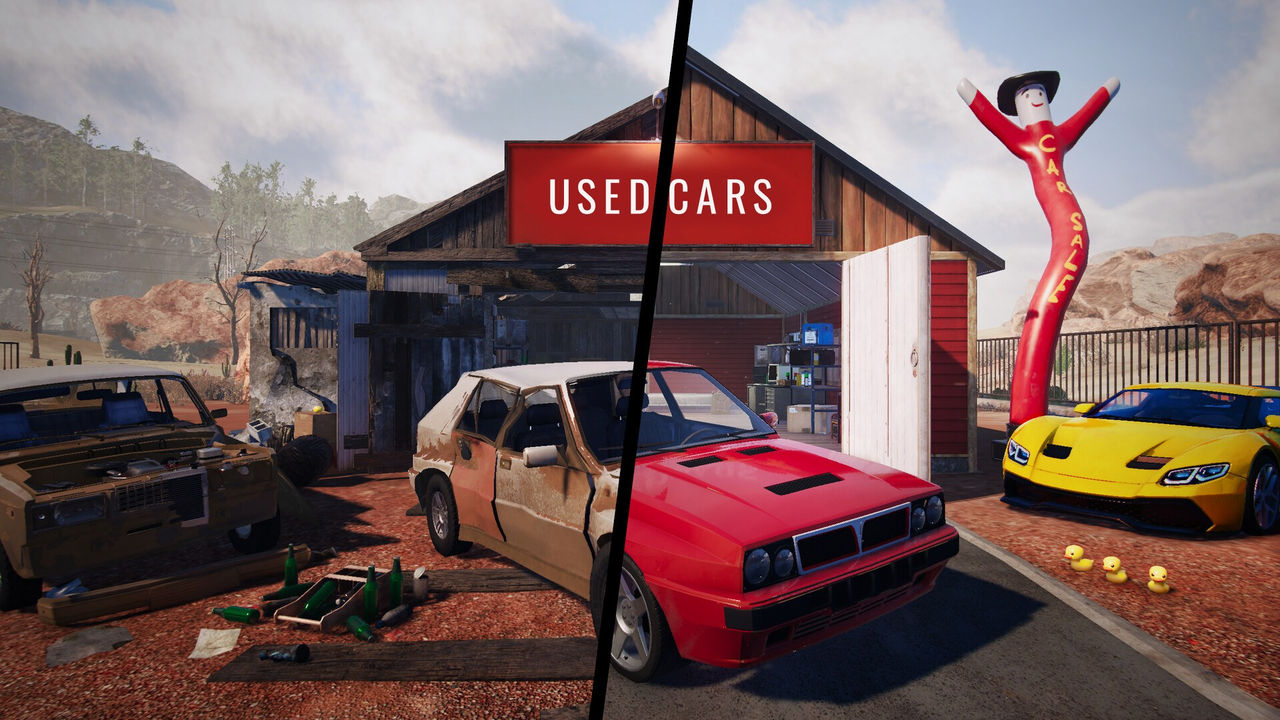
The order matters more than any single number. A cheap car with three missing parts can easily cost more than a slightly pricier car that only needs a wash and a repaint, and the store page never promises that the cheapest listing is the best deal. Your first sale also feeds a separate progression track: the achievements Reach Level 2 and Reach Level 5 sit alongside the cash milestones, so both your level and your balance are being watched.
Finding a Good Offer and Negotiating
The store page presents buying as the moment where the business is won or lost, which is a useful way to think about it: the repair stage can only recover money you have already spent. Check the car's condition before you commit, then negotiate the price with what you found. A car that needs bodywork, parts, a wash and paint has four separate costs stacked on top of the purchase price, and the store page lists all four as normal parts of the job rather than optional extras.
The same page also warns that not every car has a clean history. It says there are many ways to get cars and asks whether they are all legal, answering that they are as long as the cops do not catch you, and Police Interactions appears in the key feature list. That is as far as the official documentation goes: the store page does not describe how the police system triggers, what the consequences are, or how the illegal routes differ from buying at a dealer. Treat all of that as not documented yet.
Fixing and Flipping a Car
Repair is described as a fixed sequence of jobs rather than an open-ended garage. You fix the dents, order and install missing parts, wash the car, and repaint it, and only then do you put it up for sale. The word "order" is doing real work in that sentence, because it implies parts are bought rather than found, which makes the parts list another line in your costs. The repair page goes through each of those four jobs in turn.
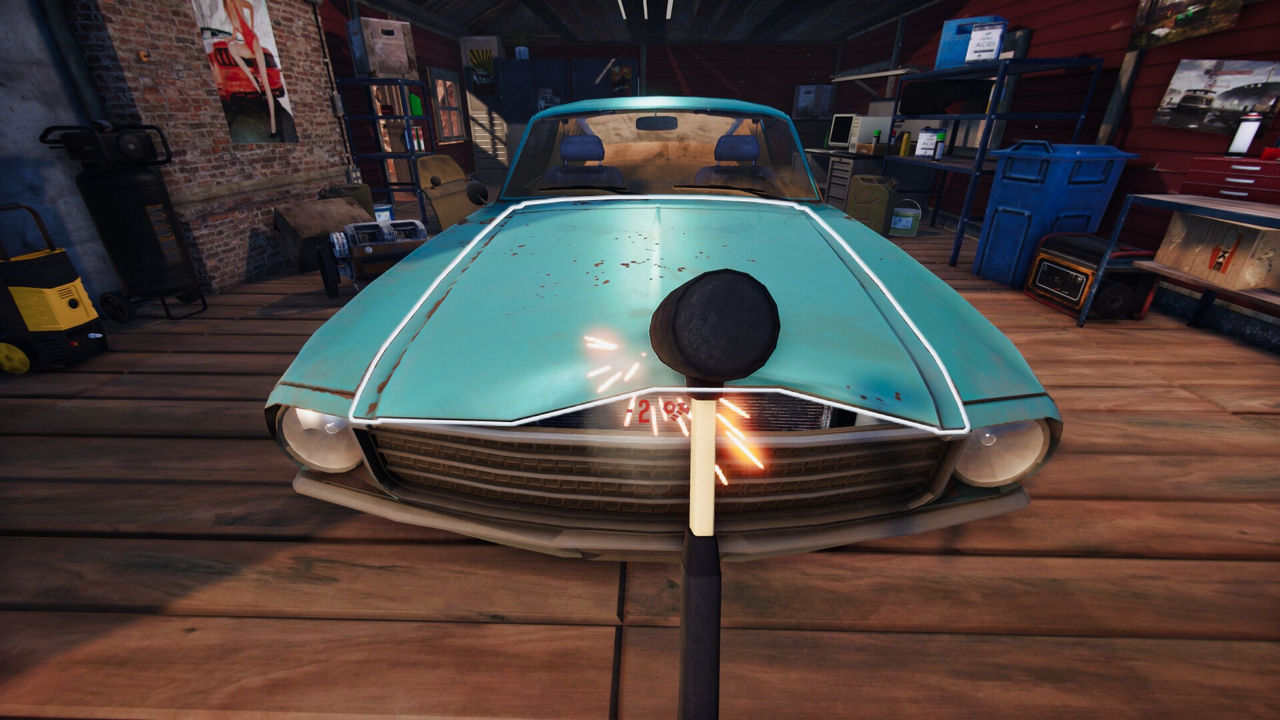
Two of the four jobs are cosmetic and two are structural, and the store page does not say whether the game's buyers care about both equally. What it does confirm is that customization is part of the loop, and the cars page collects what the store page documents about vehicle sources. If you want to know how much cash each stage realistically returns, the money page maps the achievements that track your balance against the trading loop.
Money, Levels, and Achievements
The economy is tracked publicly through Steam achievements, which makes them a decent progress checklist even if you ignore the rest of the meta. Five of the ten published names are pure cash milestones, and two more are level milestones, so the game is signalling that both a bigger balance and a higher level are intended outcomes rather than optional extras.
- Have $10,000 In Cash, Have $50,000 In Cash, Have $100,000 In Cash, Have $500,000 In Cash and Have $1,000,000 In Cash track your balance.
- Reach Level 2 and Reach Level 5 track progression separately from money.
- Buy A Car, Load A Car Onto The Tow Truck and Find All 3 Rubber Ducks cover the first purchase, the tow truck and a collectible hunt.
The achievements page lists all ten published names with the total of 92 behind them. There is no documented formula for how experience is earned, so treat any claim about the fastest route to Level 5 as unverified.
What Is Not Documented Yet
A lot of the questions a new player has are simply not answered by the store page. The car list is not published, so no page on this site can name the vehicles you will be buying. Part prices, sale values, the negotiation range, the effect of the police system, and whether damage affects resale value are all not documented yet. The store page also states that future updates will be shaped by player feedback and asks players to say which features should be added, which is a clear signal that the systems are still moving.
What is documented is the shape of the loop, and that is enough to start: find a deal, check the condition, negotiate, buy, fix the four listed jobs, sell, and reinvest. For the first-person controls and what the store page confirms about gamepads, see the controls page; for the release, price, language and feature facts in one place, see the steam page.
FAQ
- What is Used Cars Simulator?
- It is a single-player physics-based sandbox from DreamWay Games, published by PlayWay S.A., in which you buy used or stolen cars, repair and customize them, and sell them on to grow a business. The store page describes car trading and flipping, story and quests, physics and sandbox play, illegal activities, police interactions, world exploration, and upgrades and economy as its key features.
- When did Used Cars Simulator release and what does it cost?
- It released on Steam for Windows on 9 October 2026 and is listed at $11.99. There is no console version documented on the store page, and the platform list shows Windows only.
- Is Used Cars Simulator multiplayer?
- No. The store page lists single-player only, and no multiplayer or co-op mode is documented. It does use Steam Leaderboards, so score comparison with other players happens through leaderboards rather than live play.
- How does the money loop work?
- The store page breaks it into two steps: find a good offer, check the car condition, negotiate the price and buy it, then fix the dents, order and install missing parts, wash the car, repaint it and put it up for sale. Your cash milestones are also tracked by Steam achievements, from Have $10,000 In Cash up to Have $1,000,000 In Cash.
- Can I get cars without buying them?
- The store page says there are many ways to get cars and asks whether they are all legal, answering that they are as long as the cops do not catch you. That confirms police interactions and illegal activity are part of the design, but the store page does not document the specific methods, so treat the details as not documented yet.
- How many achievements does the game have?
- There are 92 Steam achievements in total. The store page publishes 10 of the names, including Buy A Car, Load A Car Onto The Tow Truck, Find All 3 Rubber Ducks, the five cash milestones and Reach Level 2 and Reach Level 5.
More in Game Guides
More game guides pages in Used Cars Simulator.
References
Facts on this page are compiled from the references above. Items marked "to confirm" are single-source and not yet verified.