
No More Room in Hell 2 · Game Guides · Guide
No More Room in Hell 2 Gameplay: Modes, Maps and Loop
No More Room in Hell 2 gameplay explained: the eight-player Objective and Survival modes, permadeath, infection, stamina combat and map list.
No More Room in Hell 2 gameplay is built on one idea: eight people, one zombie-infested map, and consequences that stick. You deploy as an emergency Responder into the dark, find your teammates, arm yourself from whatever the map provides, push through multi-step objectives and extract. The store description sums the loop up as survive, scavenge, stockpile and fulfil your mission, then repeat in an ever-changing experience. What separates it from a typical co-op shooter is that every encounter can lead to infection, and every mission can end with a Responder dying permanently. Even one zombie is dangerous here, and a crowd ends runs.
The Two Game Modes
The official store description splits the game into two distinct modes. Scenario or Objective mode is the campaign-style core, where teams journey into the heart of the outbreak to complete critical objectives and extract supplies across six maps. Survival is the wave-based alternative on dedicated environments, which the developers describe as a different way to contribute to the CRC's efforts rather than a replacement for the main mode.
| Mode | Team size | Structure | What it is for |
|---|---|---|---|
| Objective (Scenario) | Up to 8 | Story missions with multi-step objectives and extraction across six maps | The core experience and the main source of progression |
| Survival | Up to 8 | Wave defence on dedicated maps | Shorter sessions, weekly challenges and faster character levelling |
| Solo | 1 | Match-by-match play without a squad | Practice; a dedicated solo progression is in development |
What a Typical Mission Looks Like
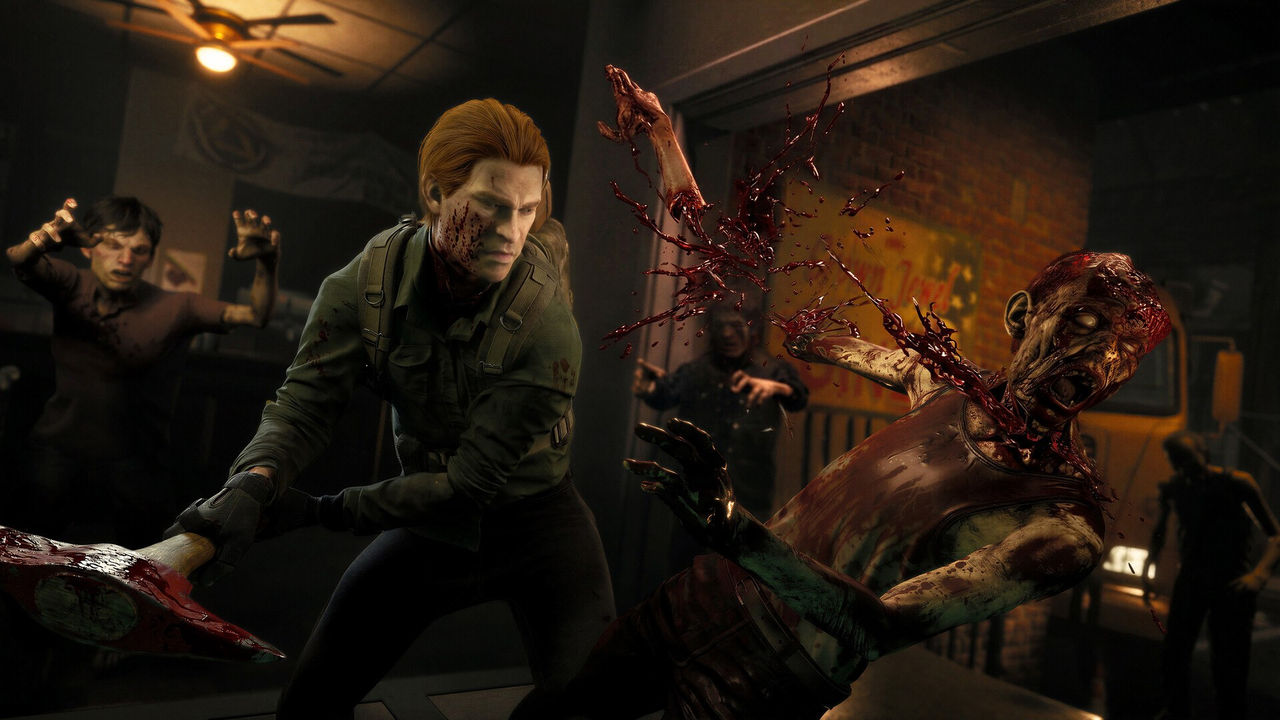
A mission is slower and more deliberate than the genre norm. GameSpot describes the campaign missions as purposely slower-paced, set on large maps with a lot of lateral space to explore, moving from woods to residential neighbourhoods to downtown areas. Some campaigns even start the squad separated, forcing players to find each other through exploration, which the reviewer named as a favourite because it makes the map feel genuinely desolate. Objectives are usually multi-step and can send the team across the whole map, so the route matters as much as the shooting.
- Deploy and regroup — you spawn into the zone; in some missions teammates start apart and have to locate each other using proximity voice chat, the coordination tool the store description highlights.
- Scavenge and arm up — ammo is scarce and players are fragile, so you discover gear as you go and decide whether a firearm is worth the noise it makes.
- Push the objectives — objectives are often multi-step and spread across the map, which is why GameSpot describes a run as a slow walk through hell rather than a firefight.
- Extract together — rewards increase as more squadmates extract, and the team can leave early at a few points on the route; extracting alone costs that run's character XP.
- Repeat and level — each successful extraction improves your odds, through upgraded starting gear and perks earned from previous missions, and levels your Responder toward new skills.
The Systems Behind the Tension
Four systems do most of the work in making No More Room in Hell 2 feel different from its peers, and they interlock. Permadeath gives death weight, infection gives every bite a clock, stamina stops you from simply running away, and the reactive horde punishes every loud decision.
| System | How it works |
|---|---|
| Permadeath | Above beginner difficulty, a dead Responder is lost for good, including their progress |
| Infection | A bite or an attack at low health can infect you; pills delay it and a gene therapy cure clears it, but both are scarce |
| Stamina | Melee swings, the kick ability and sprinting all drain stamina, so exhaustion is often what kills |
| Noise and the horde | Zombies retain their senses and every sound can cascade into full conflict; loud weapons pull the horde toward you |
| Progression | Level a Responder across successful missions to reach skill choices and stronger starting loadouts |
- Melee is the backbone — GameSpot found that killing a single zombie often takes four or more swipes with a melee weapon, and that a charged kick buys breathing room when you are surrounded, at a large stamina cost.
- Guns are a last resort — ammo is scarce and zombies are attracted to noise, so the reviewer noted you can finish some missions without firing at all, and that firing loud weapons should happen only when nothing else keeps you alive.
- Infection creates social decisions — pills are not abundant enough to go around, and an infected player coughs periodically, so squads face the choice of sharing, hiding the illness, or letting a teammate turn.
- Difficulty is not a menu pick — community documentation reports that difficulty is set by the average Responder level in the lobby at the start of a match, with Nightmare requiring an average level of 45 and paying higher account and character XP; treat those specific thresholds as to confirm, since they come from the community wiki rather than an official page.
The Maps You Will Play
The store description names the launch locations directly, and the developers have since used blog posts to name additional ones. The launch set of six Objective maps covers the Northeast Coast of the United States, each with a different time of day and its own themed objectives.
- Lewiston, Maine — an urban centre, and the map the September 2026 update added additional objective permutations to.
- Broadway, New York — the city setting, and the subject of a PC Gaming Show trailer named Welcome to Broadway.
- Industrial outskirts of Pennsylvania — the setting GameSpot describes when it says campaigns move from woods to neighbourhoods to downtown.
- Beaulieu Hospital — a facility map, named for improvements in the roadmap post's Resupply and Hospital notes.
- A government Bunker — the official description's facility location alongside the hospital.
- Power Plant — the map that shipped with Early Access, per the developers' own roadmap notes.
- Pottsville and Raven Rock — additional locations named in developer posts, with a brand new scenario for Pottsville promised and critical supply issues on Raven Rock acknowledged at the time.
For the map-by-map breakdown see the maps page; for the enemies you will meet, the zombie types page and the infection page go deeper, and the weapons page covers the arsenal. If you are starting fresh, begin with the beginner guide, and All Guides lists every page on the site.
FAQ
- What do you actually do in No More Room in Hell 2?
- You deploy as an emergency Responder into a zombie-infested zone with up to seven other players, arm yourself from scarce supplies, complete multi-step objectives across the map, and extract together. The store description frames the loop as survive, scavenge, stockpile and fulfil your mission, then repeat in an ever-changing experience. Every choice affects how the horde reacts, and dying above the beginner difficulty is permanent.
- What game modes does No More Room in Hell 2 have?
- Two distinct modes. Scenario or Objective mode is the campaign-style core, with teams pushing deep into the outbreak across six maps to complete themed objectives and extract supplies. Survival is a wave-based defence mode on dedicated maps that GameSpot described as a shorter alternative, useful for farming weekly challenges and levelling characters faster than the main mode allows.
- How long does a No More Room in Hell 2 mission take?
- Roughly 30 to 60 minutes for a campaign mission, according to the GameSpot review. Missions offer a few early exits along the way, and a player can extract alone if they simply want to survive, at the cost of any character XP gains from that run. That makes leaving early a real decision rather than a fail state.
- Is death permanent in No More Room in Hell 2?
- Above the beginner difficulty, yes. GameSpot confirms permadeath is part of the experience when playing higher than beginner, and the store description says every mission risks your character dying forever. Characters are rolled randomly with basic stats and a backstory, can have their clothing customised, and level up with each successful campaign before unlocking skills of your choosing.
- How does infection work in No More Room in Hell 2?
- A zombie encounter can infect your Responder, setting off a race to find pills or a gene therapy cure before your character turns and rises against your allies. GameSpot notes pills only hold infection at bay temporarily, and that infected players give themselves away by coughing, which creates the social tension of deciding whether to share scarce medication. A turned Responder becomes a faster variant that hunts the squad.
More in Game Guides
More game guides pages in No More Room in Hell 2.
References
- No More Room in Hell 2 - Xbox Store
- No More Room in Hell 2 - PlayStation Store
- No More Room In Hell 2 Review - GameSpot
- No More Room in Hell 2 gameplay - ResetEra
Facts on this page are compiled from the references above. Items marked "to confirm" are single-source and not yet verified.