
No More Room in Hell 2 · Game Guides · Guide
No More Room in Hell 2 Beginners Guide: First Hours, Difficulty and Tips
No More Room in Hell 2 beginners guide: how a first match actually starts, the 1.0 difficulty tiers, stamina and noise basics, and the mistakes that end runs.
A No More Room in Hell 2 beginners guide has to start with an honest description of the first match, because the game does not set you up gently. The Epic Games Store explainer describes it exactly: you spawn completely alone with hardly any weapons, often in the dark, with no large interface arrows telling you where to go and only a map and compass for direction. The eight-player co-op framing is the goal rather than the opening state, and how quickly you find other Responders decides how the first twenty minutes feel. Everything below is drawn from official patch notes and published reviews, and the parts resting on a single third-party source are marked to confirm.
What Your First Match Actually Looks Like
The opening loop is consistent across the material: land alone, scavenge what you can, follow objectives, find the other seven players, then finish the mission and extract together. The Epic explainer frames the flashlight as your first priority, and the review coverage adds the detail that the maps are large enough to make that search genuinely long.
| First-match step | What it involves |
|---|---|
| Spawn | Alone, poorly armed, frequently at night |
| Light up | Flashlight becomes the primary tool immediately |
| Navigate | Map and compass instead of objective arrows |
| Loot | Weapons and gear are scattered in the environment |
| Regroup | Signs of other players lead to the rest of the squad |
| Extract | Finish the final objective and leave together |
- Do not rush the regroup — wandering alone into a horde with no weapon is the fastest way to lose a Responder, so move quietly and take the safe route toward signs of other players.
- Check what you are carrying before you need it — the Gameoneer impressions piece notes the inventory limit is tight and that the game does not clearly say whether it counts weight, item count or both, so make decisions early.
- Expect the flashlight to matter — with darkness as the default state and no objective markers, a working light is closer to a navigation tool than a convenience.
Difficulty Tiers and What They Change
Difficulty in No More Room in Hell 2 is the single biggest lever on how forgiving a run is, and 1.0 renamed the tiers while retuning them. For a beginner the main point is that the easiest tier is genuinely designed for learning, with permanent on-screen prompts and weaker zombies.
| Tier | Documented effects and reward multipliers |
|---|---|
| Beginner (was Casual) | UI elements always on including control hints and objective reminders; zombie effective health reduced 30 percent; respawns return every minute on a timer |
| Normal (was Classic) | Respawning enabled after completing a major objective; Character XP multiplier raised from 120 to 125 percent |
| Hard | Account XP 120 to 150 percent; Character XP 160 to 200 percent; Credit multiplier 120 to 150 percent |
| Nightmare | Account XP 120 to 200 percent; Character XP 200 to 300 percent; Credit multiplier 130 to 200 percent; full nameplates when close to allies |
Those figures come directly from the official Armageddon 1.0 notes. The practical advice that follows is simple: stay on Beginner for several runs rather than treating it as a formality, because the 30 percent zombie health reduction and the one-minute respawn timer do more for a new player than any perk.
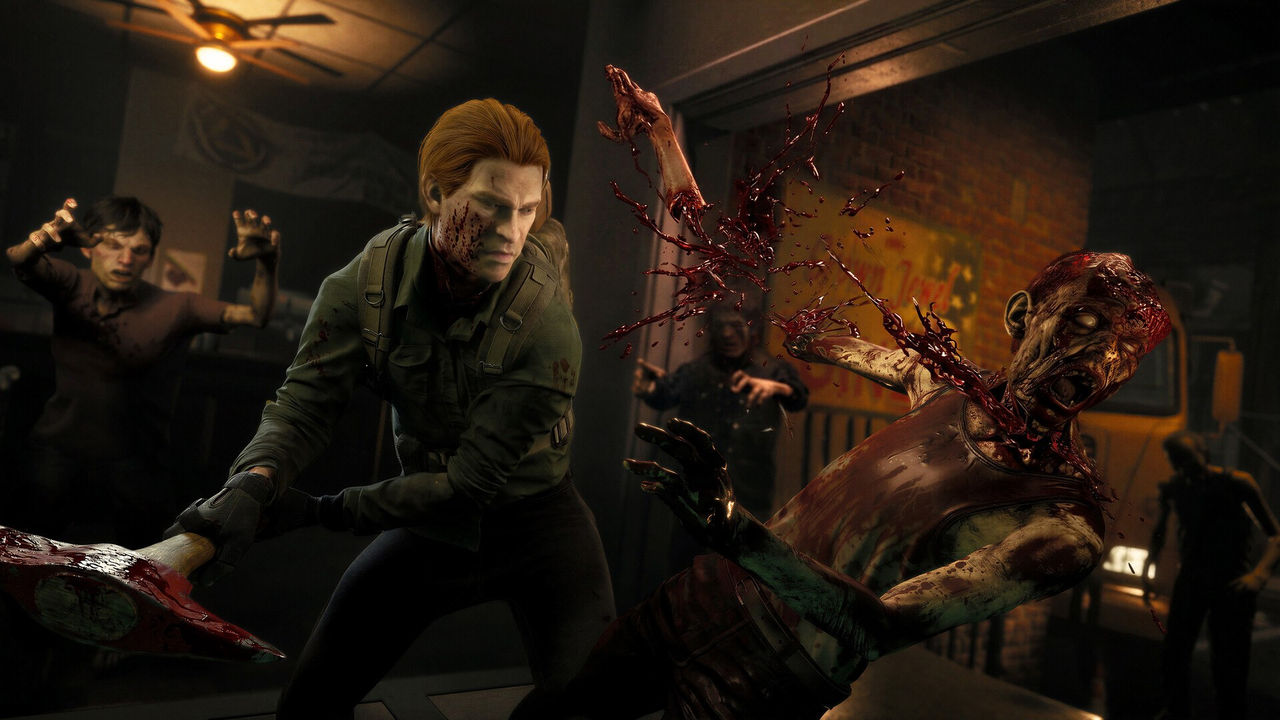
Stamina, Noise and Melee Basics
Combat in this game punishes two specific habits, and both are covered well enough by published reviews to state plainly. The first is thinking of melee as a fallback, and the second is thinking of sound as neutral.
- Melee is the primary weapon, not a backup — the GameSpot review notes that a single zombie often takes four or more swipes and that headshots do the real work while body blows mainly drain you.
- Sprinting is a resource, not a default — stamina also pays for melee swings and the kick, and the review notes that running from one horde can leave you unable to fight the next.
- The kick buys space at a price — the review describes it as a strong way to escape a surround that eats a large chunk of stamina, so it is an emergency tool rather than a rotation.
- Noise pulls the map toward you — the review is explicit that zombies are attracted to sound, which is why unsuppressed gunfire is a decision you make for the whole team rather than a personal one.
Habits That Keep a Responder Alive
The last set of lessons is about run discipline, and it comes from the same review coverage that describes late-run failures in detail. The consistent theme is that a run rarely dies from one mistake; it dies from a chain of them while the squad is separated.
- Extract early when the run turns — the review notes that missions run roughly 30 to 60 minutes but offer early exits, at the cost of character XP, which is a fair trade for a leveled character.
- Use the tutorial and training range — the 1.0 notes describe a guided tutorial covering melee, ranged combat, objective trials and inventory management, so a new player can learn the basics before risking a Responder.
- Practise maps without permadeath — Solo Mode turns permadeath off, which the notes give as the reason it exists, making it the safest place to learn routes and objectives.
- Watch your health before a fight, not during it — the community infection rules make every zombie hit dangerous below 50 percent health, so a low-health beginning is a reason to avoid an encounter entirely.
- Remember that account progress survives — the Epic explainer confirms account level keeps growing even through deaths, so a lost Responder is a setback rather than a reset.
For the mode that lets you learn without risk, see the solo mode page. The maps page covers the nine locations you will be learning, the infection page explains the cough you should never ignore, the zombie types page covers what is chasing you, the utility items page lists what to buy first, and the gameplay page explains how the whole loop fits together. All Guides lists every page.
FAQ
- How does a match start in No More Room in Hell 2?
- The Epic Games Store explainer describes the opening plainly: you spawn completely alone, with almost no weapons, often at night, and your flashlight becomes your best tool. There are no large UI arrows pointing to objectives, so you find your way with the map and compass until you meet up with other Responders.
- What difficulty should a beginner start on in No More Room in Hell 2?
- Beginner, which was renamed from Casual in the 1.0 update. The official notes say Beginner keeps UI elements such as control hints and objective reminders permanently on, reduces zombies' effective health by 30 percent, and ties respawns to a timer that returns players every minute, which makes it the most forgiving setting for learning the maps.
- What is the most common beginner mistake in No More Room in Hell 2?
- Treating it like a shooter. GameSpot's review notes that killing even one zombie often takes four or more melee swipes, that body blows mainly tire you out, and that loud weapons draw more enemies, so the run-ending mistake is usually starting a fight you did not need rather than missing a shot.
- How does stamina work in No More Room in Hell 2?
- Stamina is the resource behind sprinting, kicking and melee swings, and the review describes managing it as a near-constant exercise. Running away from one horde can leave you exhausted when you meet the next, and the kick ability buys breathing room but costs a large chunk of stamina, so sprinting is a decision with a cost.
- Do you lose progress when you die in No More Room in Hell 2?
- Your Responder and their loadout are lost permanently under permadeath, but your account level keeps growing regardless, which the Epic explainer confirms. That split is what makes a death survivable: you lose the character and their purchased gear but keep the account progress that unlocks skills and improves your next run.
More in Game Guides
More game guides pages in No More Room in Hell 2.
References
- No More Room in Hell 2 explained - Epic Games Store News
- Beginner Tips For No More Room In Hell 2 - GameRant
- No More Room In Hell 2 Review - GameSpot
- Update Notes: Armageddon (1.0) - No More Room In Hell 2
Facts on this page are compiled from the references above. Items marked "to confirm" are single-source and not yet verified.