
Farming Camp · Game Guides · Guide
Farming Camp Guide — How to Play, Daily Sessions, Chores and Mini-Games
A Farming Camp guide to the two-session day, the crop, animal and fishing chores, camp mini-games, points, homework and the Saturday cookout.
What Farming Camp Is, and How a Day Is Built
Farming Camp is a single-player farming management game from developer Innerfire Studios, published by SOEDESCO and released on September 24, 2026. You play as Alessandra, a teenager who arrives at the Evertree Farming Camp, is handed the leadership of Team Blueberry Jam, and spends a four-week contest trying to finish as the best-performing student and earn the title of Evertree Farmer. The Steam page calls it a cozy single-player farm management game; the publisher leans harder on the story, describing an ambitious teenager competing to become the best farmer in the camp while managing chores for points and dealing with a colorful cast. That framing matters for how you play, because the farming is deliberately light and the daily schedule is the real system.
The day is built from sessions, not from a clock. Each main activity consumes either a morning or an afternoon, which caps a normal day at two scored chores, and time only moves when you complete a main task. Evenings are free for foraging, errands and conversation, while the weekend stops work entirely except for the Saturday cooking challenge.
| Slot | What happens there |
|---|---|
| Morning | One main activity — a lesson, a scored chore or a story scene |
| Afternoon | A second main activity, allocated the same way |
| Evening | Foraging, campfire scenes and dialogue before bed |
| Weekend | No chores; the timed Saturday cookout is the only obligation |
| Maintenance tasks | Fitted in before a main activity, because they do not take a session |
Crops, Animals and Fishing: the Three Scored Chores
Every chore is worth points, and points decide which team wins the summer. The three main chores each cost a full session.
| Chore | What you actually do | Session cost |
|---|---|---|
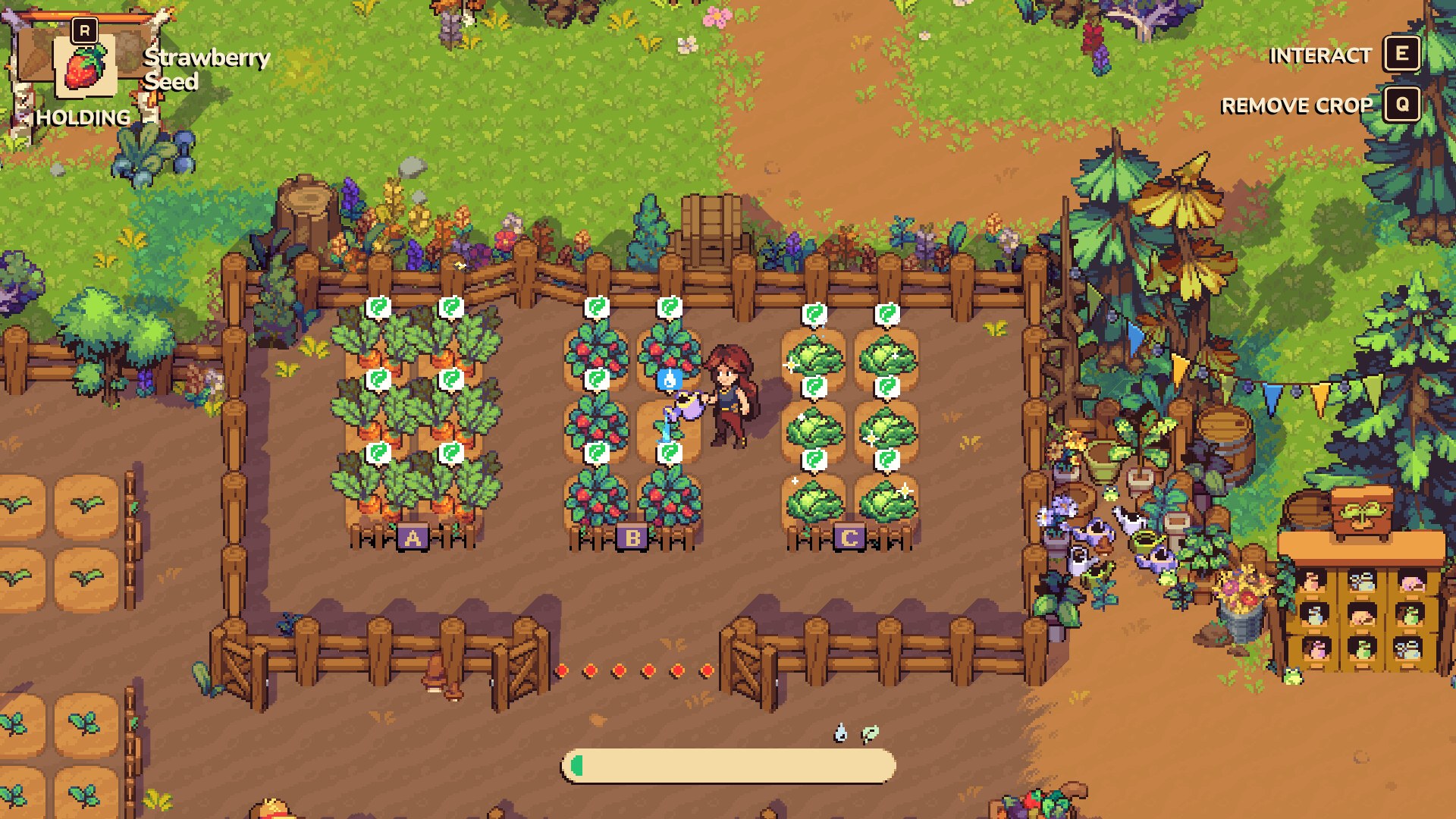
| Farming | Sow, water and harvest the team plot; a pop-up-and-bash mini-game clears pests before they cost you yield | A morning or an afternoon |
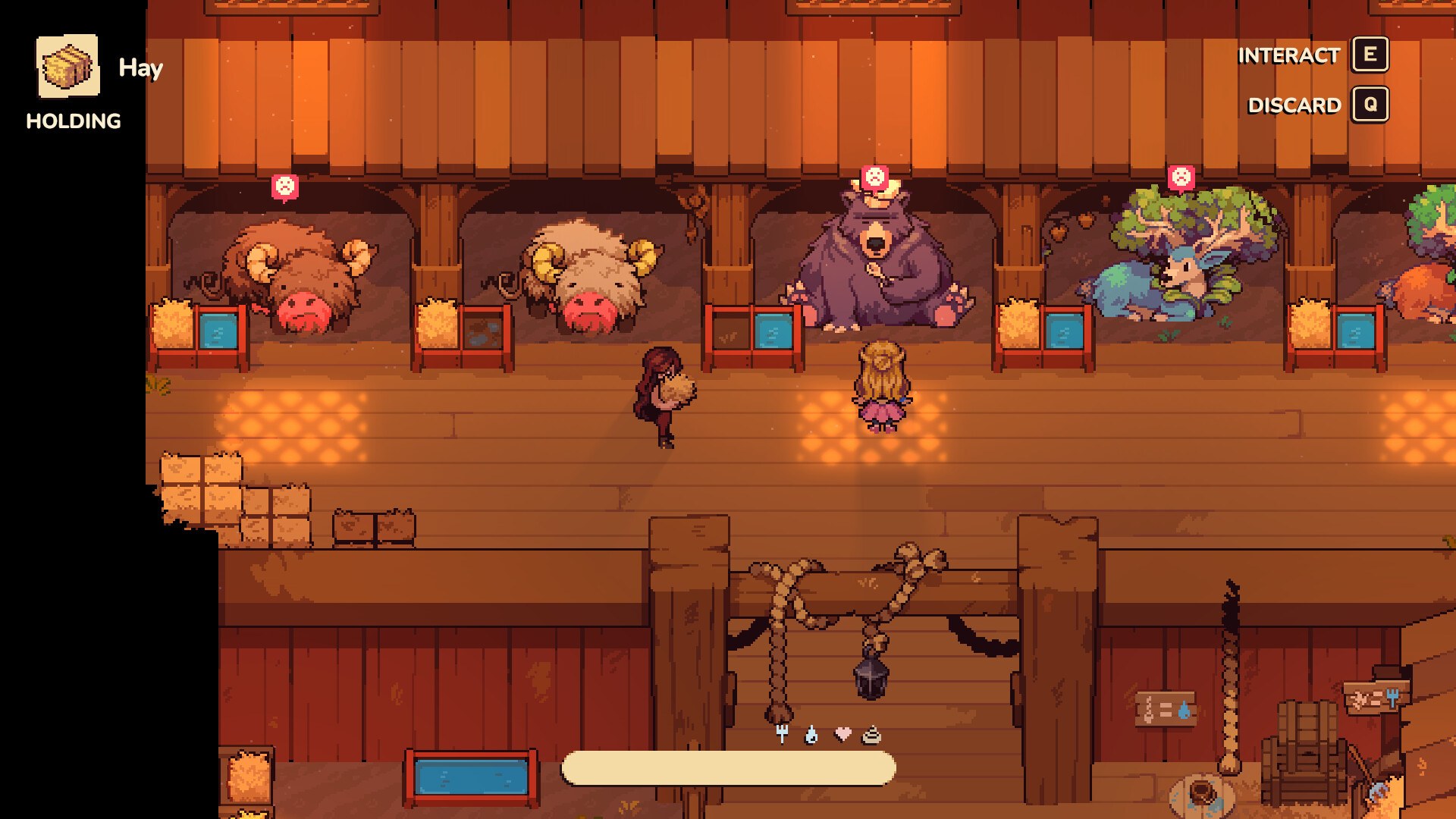
| Animal care | Feed the animals, refill their water and pet them | A morning or an afternoon |
| Fishing | A timed boat run down the river: steer up and down to miss the rocks and scoop fish as you pass, with no rod involved | A morning or an afternoon |
Farming follows the familiar sow, water, harvest formula with one addition, because bugs have to be removed by hand and the removal is its own small mini-game. Animal care keeps the usual feeding, watering and petting loop. Fishing is the odd one out and the most distinctive of the three, since it is a movement challenge rather than a menu.
Because you lead a team, you do not have to do all of it yourself. Assigning chores to teammates is the intended way to cover the ingredient list, and the team standings are posted on the noticeboard near the main hall.
Camp Maintenance and the Mini-Game List
Maintenance tasks sit outside the session budget. They are short, they can be done before your main activity of the day, and they vary wildly in difficulty: mopping a floor is easy, while chopping wood is the task that both a written review and the in-game lesson scenes single out as brutal. Assist Mode buys extra time on some of them, notably cooking, but it does not make chopping wood any easier.
| Task | Cost | Difficulty |
|---|---|---|
| Mopping floors | Not a full session | Easy |
| Dishwashing | Not a full session | Reported as buggy at launch — one reviewer could not interact with the sink |
| Chopping wood | Not a full session | The hardest of the maintenance tasks, and Assist Mode does not soften it |
| Saturday cookout | The weekend | Timed: mix, chop, bake and plate one part of a recipe |
| Item mini-games | Depends on the item | Playing guitar for your plants, blending a smoothie to boost your speed |
Two reviews flag the same rough edge: interact prompts sometimes fail to fire, so picking up hay in the barn or grabbing the right item in the kitchen can take several attempts. That is a launch-build problem rather than a rule of the game, but it is worth knowing before you blame your own aim.
Points, Homework and the Saturday Cookout
Progress is measured in points, and points come from more than farming. Completing chores, keeping the camp tidy, attending classes and finishing missions all feed the same scoreboard, and the team with the most points at the end of the summer wins.
The weekly rhythm is a homework loop. After class you receive a list of ingredients to gather, and Saturday turns that list into a cooking challenge that pays out heavily. Under-delivering costs you: in launch-week playthrough footage a lesson scene warns that homework handed in late only earns half points, and the game is balanced so a missed assignment is a real loss rather than a rounding error.
- Check the noticeboard by the main hall regularly — it is the only place the team standings are displayed.
- Spend your two daily sessions on the chores that feed that week's ingredient list first, then on story.
- Use the leader privilege early: hand routine chores to teammates and keep your own sessions for the tasks you are good at.
- Do maintenance before you commit a session, because it costs nothing from the budget.
- Treat the Saturday cookout as the week's deadline; everything you plant should point at it.
A Practical First-Week Plan
- Day one: follow the movement and interaction tutorial, then sit through the first lesson on growing crops so the assignment unlocks.
- Plant fast crops over slow ones while you learn the map, and clear pests as soon as they appear.
- Water, then forage the surrounding area — foraging is free, does not cost a session, and often triggers a request from a teacher or a camper.
- Learn animal care and fishing on the following days rather than guessing; fishing is a timed steering challenge that punishes a late start.
- Talk to teachers and campers in the evenings. Some of it is flavor and some of it is story, and a reviewer notes it is easy to run out of time for the conversations you wanted.
- Save manually in one of the three slots before the weekend, since the cookout is the one timed event you cannot retry casually.
Settings, Saves and Difficulty
Assist Mode is the main difficulty dial, and it does not flatten everything: it gives you more time in the cooking challenge and helps with a handful of other tasks, but the wood-chopping mini-game stays hard either way. Text size can be enlarged for handheld play. The game auto-saves at key points, allows manual saves in any of three slots, and accepts a save carried over from the free demo. The demo is available on Steam and on the Nintendo eShop, so it is possible to test the pacing — and the two-sessions-a-day structure — before buying.
FAQ
- How many main tasks can you finish in one day?
- Two. Each main activity takes either a morning or an afternoon session, so a normal day covers at most two of the scored chores. As team leader you can hand jobs to your teammates, which is how a team covers more ground than one camper can alone.
- What do you grow in the first week?
- The team plots in the opening days are planted with strawberry, carrot and cabbage, and the post-lesson assignment asks every team to gather ingredients for the weekend cookout. Crops that take longer to grow are worth more points, so fast crops are the safer pick while you learn the schedule.
- Is there a real-time clock or a time limit each day?
- No ticking clock. The time of day advances as you finish a main task rather than running down in real time, and there is no fail state for taking too long. The contest itself is fixed: the camp runs for four weeks, and the in-game countdown in launch-week playthrough footage puts the summer at 27 days from the first morning.
- Can you save at any time?
- The game auto-saves at key points and also offers a manual save in any of three slots. A save carried over from the free demo also works, so progress from the pre-launch demo is not wasted.
- How long does a playthrough take?
- Reviewers disagree, and the gap tracks how much dialogue you read. LadiesGamers spent around 8.5 hours trying to become the Evertree Farmer, while Bonus Action finished the main story in roughly 4 hours and found the volume of dialogue limited replay value.
References
- Farming Camp on Steam — store page and app details (appid 2985880)
- Farming Camp — SOEDESCO official product page
- Farming Camp Review — LadiesGamers
- Farming Camp Review: A Unique Concept Held Back By Its Own Mechanics — Bonus Action
- Farming Camp for Nintendo Switch — Nintendo official store page
- Farming Camp launch-week full-game playthrough (in-game lesson scenes and dialogue) — YouTube
Facts on this page are compiled from the references above. Items marked "to confirm" are single-source and not yet verified.