
RADIOSOL · Game Guides · Guide
RADIOSOL Guide — The Sun-Scorched Open World and Your First Hours
A RADIOSOL guide to the sun-scorched open world: spider robot navigation, radio transmitter objectives, sunburn and Dust Devil hazards, and early tips.
RADIOSOL is a single-player, third-person open-world sci-fi adventure in which you control a spider-like robot across a world burned by a planetary cataclysm. The Steam page puts the core assignment in one sentence: navigate through the ruins of megastructures and abandoned cities, avoiding the scorching rays of the Sun. This RADIOSOL guide collects everything actually documented about how that loop works — the navigation aids the game gives you, the hazards that damage your machine, and the radio transmitter objectives — as of the Chapter I launch on 30 September 2026.
Because the game launched only a day before this page was written, treat it as a living document. The developer has already shipped two rounds of patch notes (Update 1 on 22 September and an October 1 patch), and several of those fixes directly touch the systems described below.
What RADIOSOL Is and How It Plays
The official store description frames RADIOSOL as "a journey through a desolate world burned by a planetary cataclysm." You are not a human survivor: the narration on the store page speaks from inside a many-limbed machine that hears "every radio station" and calls itself "the world's ear." IGDB classifies the game as third-person and single-player with science fiction and open world themes, and SteamDB community tags add Walking Simulator, Exploration, Post-apocalyptic, Story Rich and Lore-Rich to the picture. This is a traversal and listening game, not a combat game — there is no documented weapon or combat system anywhere in the official material.
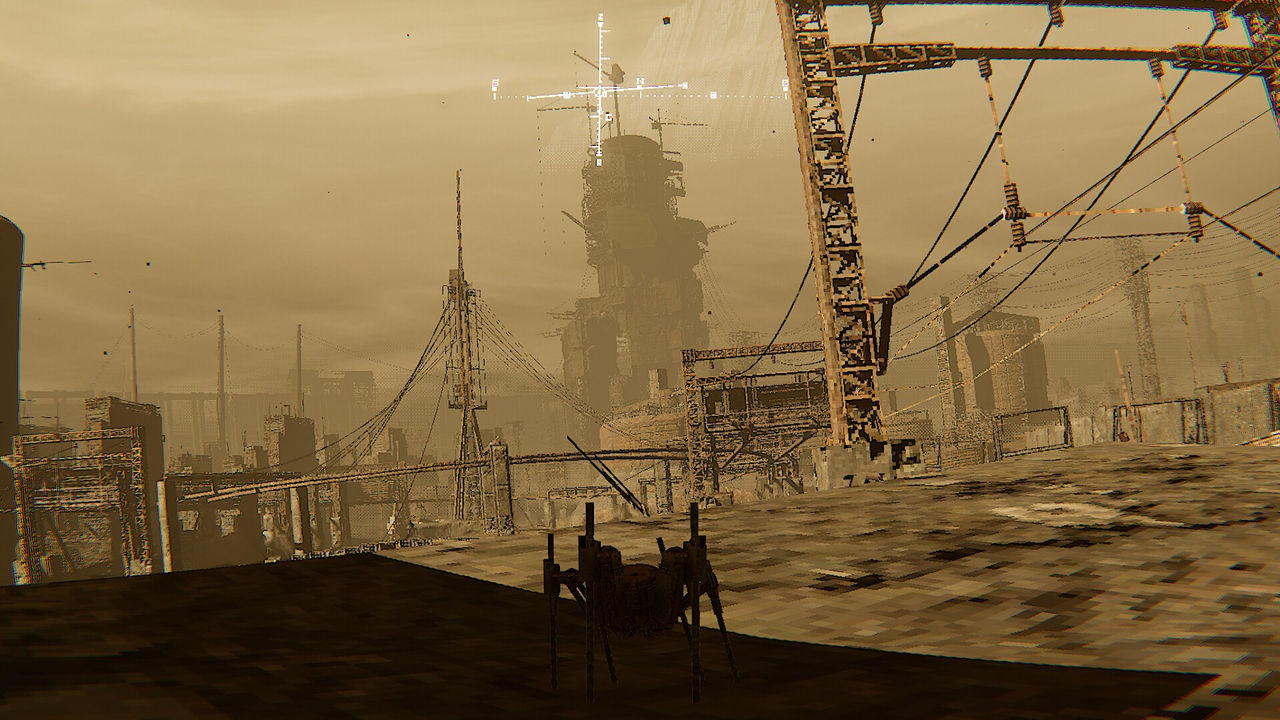
The essentials in one table:
| Fact | Documented value | Source |
|---|---|---|
| Developer / publisher | TripletConcept (with Yodez, Hius, WhereaboutsUnknown) | Steam |
| Release date | 30 September 2026 (17:44 UTC per SteamDB) | Steam, SteamDB |
| Price | $8.99 USD, no launch discount recorded | Steam, SteamDB |
| Platforms | Windows and Linux (no Mac version listed) | Steam, SteamDB |
| Genres and tags | Adventure / Indie / Simulation plus Open World, Walking Simulator, Sci-fi community tags | Steam, SteamDB, IGDB |
| Perspective and mode | Third person, single player | IGDB |
The Core Loop: Navigate, Listen, Transmit
The clearest documented objective comes from the Steam Community Hub, where a player posted an in-game "Radio" task verbatim: "Tune the megabroadcaster transmitter to the registry frequency (technical coordinates x:0.75, y:0.25) and transmit the registration file." The same player described the solution path — open the file marked SDR_Transmitter.mByte, set SWEEP X to 0.750 and SWEEP Y to 0.250, select account_file.mByte as the audio file, and transmit. Expect radio tuning, frequency sweeps and file transmission to be recurring objective types rather than a one-off puzzle, since the narration itself is built around a machine that "hears every radio station."
A community guide on the hub also documents a side hunt for the "Kalipso-5" probes — nine of them — which gives early players a concrete optional goal beyond the main route. Both objective styles reward methodical exploration over speed.
Documented building blocks of the loop so far:
- Landmark-based navigation — the game gives directions to landmarks you must identify yourself; early Steam reviews note this ambiguity explicitly, so treat getting momentarily lost as normal.
- Radio tuning and transmission — set SWEEP coordinates on a transmitter and send files, as in the megabroadcaster objective above.
- Probe hunting — the community-documented Kalipso-5 probe search spans nine collectibles.
- District learning — an October 1 patch made district names display on every visit, which slowly turns the ruins into a mental map.
The Sun and Other Hazards
The Sun is the headline hazard. The store description instructs you to avoid its scorching rays, and the narration explains that "only concrete mountains block the Sun" and that night no longer falls quickly in the man-made valleys. The Steam achievement list backs this up with an achievement literally named Sunburns, and Update 1 separately references the spider damage system and a cognitive damage effect — so damage comes in at least two documented flavors, physical and cognitive. The same patch also calls out Dust Devil behavior, confirming roaming dust devils as an environmental threat.
| Hazard | What is documented | Evidence |
|---|---|---|
| The scorching Sun | Avoid its rays; shade comes from concrete megastructures; sunburn is an acknowledged state | Store description, Sunburns achievement |
| Spider damage system | Physical damage to your machine, with audio cues integrated in Update 1 | Update 1 patch notes, 22 Sep 2026 |
| Cognitive damage | A distinct cognitive damage effect, improved in Update 1 | Update 1 patch notes |
| Dust Devils | Roaming environmental hazard whose behavior the developers tuned in Update 1 | Update 1 patch notes |
Navigation Aids the Game Gives You
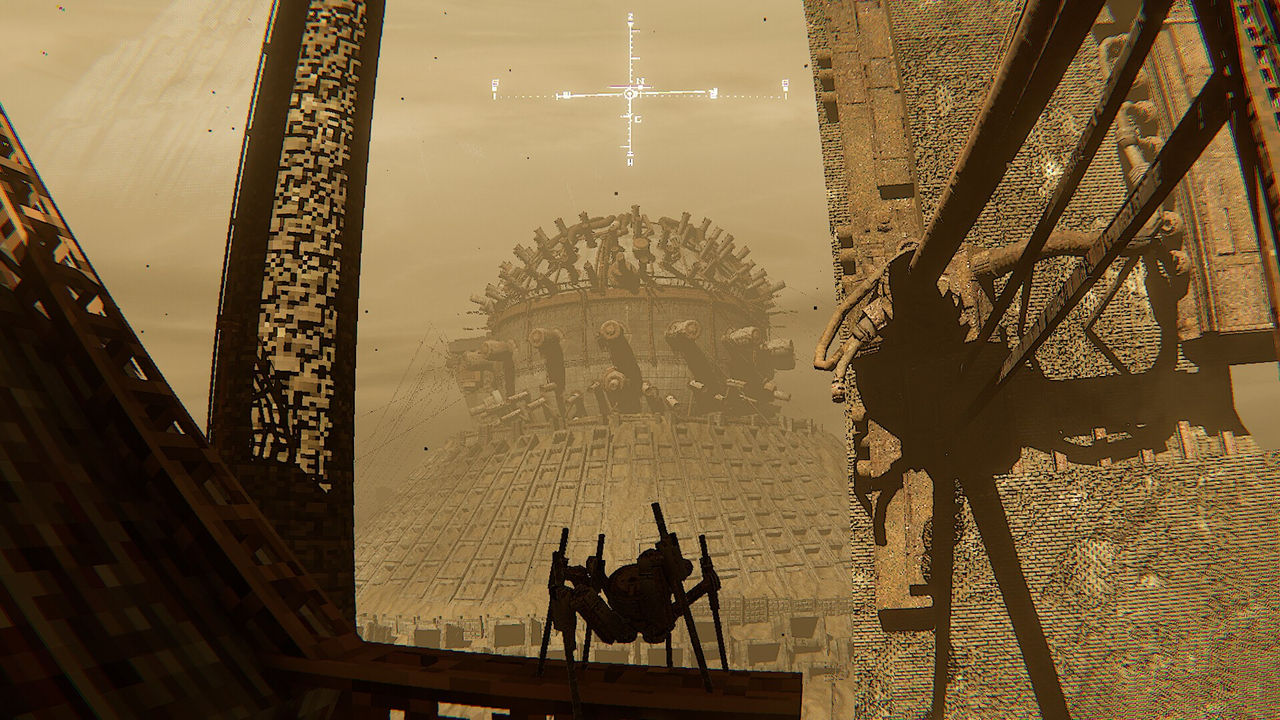
The developers have been actively patching navigation, which tells you it is the system players struggled with first. The October 1 patch improved navigation to the Sphere entrance and the Service Depot, fixed incorrect cardinal-direction hints and an incorrect marker button prompt, and made district names display on every visit. Update 1 made radio markers persist between sessions ("Radio markers are now saved") and added new tutorial text. Named locations confirmed by the patches so far include the Sphere, the Service Depot and the Megapol lobby.
Practical early-hours habits drawn from these notes:
- Follow cardinal-direction hints but sanity-check them against visible landmarks — one patch specifically fixed hints that pointed the wrong way.
- Assume every radio marker you drop is now permanent, so use them deliberately to build a route network.
- Learn district names as they appear; they are the closest thing to a map layer the game currently exposes.
- When an objective says to look for a landmark, budget extra time — early players report the directions can be indirect.
Patch Context and Where This Guide Goes Next
Two patches landed inside the launch window. Update 1 (22 September) covered stuck spots, out-of-bounds gaps, radio marker saving, tutorial text and the damage systems, and even "added new objects to scare unsuspecting players." The October 1 patch fixed a critical softlock when exiting the Sphere through your entry route, tamed excessive Player.log growth, and improved graphics performance. That Player.log note matters in practice: an early review described the log file ballooning to gigabytes after long sessions or near "a certain tornado," so if your system slows to a crawl, clearing the oversized log is the community workaround until further patches arrive.
This page will keep tracking the loop as more of Chapter I gets documented. For the story layer behind the machine narration, see the RADIOSOL story page; for hazard management in more depth, see the survival page; for platform facts like price and requirements, see the Steam page.
FAQ
- What kind of game is RADIOSOL?
- The Steam page describes RADIOSOL as a journey through a desolate world burned by a planetary cataclysm, where you navigate the ruins of megastructures and abandoned cities while avoiding the scorching rays of the Sun. It is a single-player, third-person open-world sci-fi adventure from TripletConcept.
- How does the radio transmitter objective work in RADIOSOL?
- A community-documented objective reads: tune the megabroadcaster transmitter to the registry frequency at technical coordinates x:0.75, y:0.25 and transmit the registration file. The player did this by activating the SDR_Transmitter.mByte file, setting SWEEP X to 0.750 and SWEEP Y to 0.250, selecting account_file.mByte as the audio file, then transmitting.
- Does RADIOSOL have damage mechanics?
- Yes. The Update 1 patch notes (22 September 2026) reference the spider damage system, audio integration with that damage system, and a cognitive damage effect. The Sunburns achievement on Steam also points at sun exposure being punished.
- Is RADIOSOL open world?
- SteamDB community tags for the game include Open World, Exploration, Walking Simulator and Sci-fi, and IGDB lists open world as a theme. The store description itself frames the whole burned world as your traversal space rather than level-based stages.
- How much does RADIOSOL cost and where can I play it?
- It costs $8.99 on Steam, launched on 30 September 2026, and runs on Windows and Linux. There is no Mac version listed, and it is a single-player game with Steam Achievements, Stats and Family Sharing support.
More in Game Guides
More game guides pages in RADIOSOL.
RADIOSOL Survival — Beating the Sun, Damage and Dust Devils
GuideRADIOSOL survival basics: the scorching Sun, spider damage, cognitive damage and Dust Devils, plus the navigation aids that keep your machine alive.
RADIOSOL Tips — Navigation, Sun Safety and Performance
GuidePractical RADIOSOL tips: use district names and cardinal hints, keep radio markers saved, avoid the scorching Sun, watch Dust Devils, clear the Player.log.
References
- RADIOSOL on Steam
- RADIOSOL — Steam Community Hub (patch notes and objectives)
- Radiosol (2026) — IGDB
- RADIOSOL — SteamDB
Facts on this page are compiled from the references above. Items marked "to confirm" are single-source and not yet verified.