
Anshi · Systems · Guide
Anshi Cards
Anshi cards explained for the 2026 card strategy game: how the hand directs pieces, how Health and Morale differ, and how action cycles work.
Anshi cards are the tool you use to direct your pieces in the 2026 card strategy game Anshi, a single-player card strategy game with no gameplay randomness from xchongsu. You hold a hand, inspect both sides' actions, targets and upcoming skills, then play cards to shift your own pieces' action cycles. Because there is no randomness, the value of a card is not luck: it is how well you time it against the Boss's plans.
How the Hand Directs Pieces
Each piece has its own skills and an action cycle, and the store page's description of play is about manipulating that cycle rather than moving pieces freely. Using your cards lets you bring a needed skill forward, respond to the Boss's plans, and set up the skills that follow. That means the same hand can play out very differently depending on which piece you target and where that piece currently sits in its cycle. During the Stealth Phase your hand is described as limited, and it is what you use to counter the Boss's Rumors, so spending a card early has a real cost.
Health and Morale: Two Resources, Two Jobs
The two resources are not interchangeable.
| Resource | What it does | How it changes |
|---|---|---|
| Health | Keeps a piece in the fight | Drained by the Boss's night raids during the Stealth Phase |
| Morale | Sets acting order and unlocks enhanced skills | Blocked by Rumors, but also built by taking direct damage |
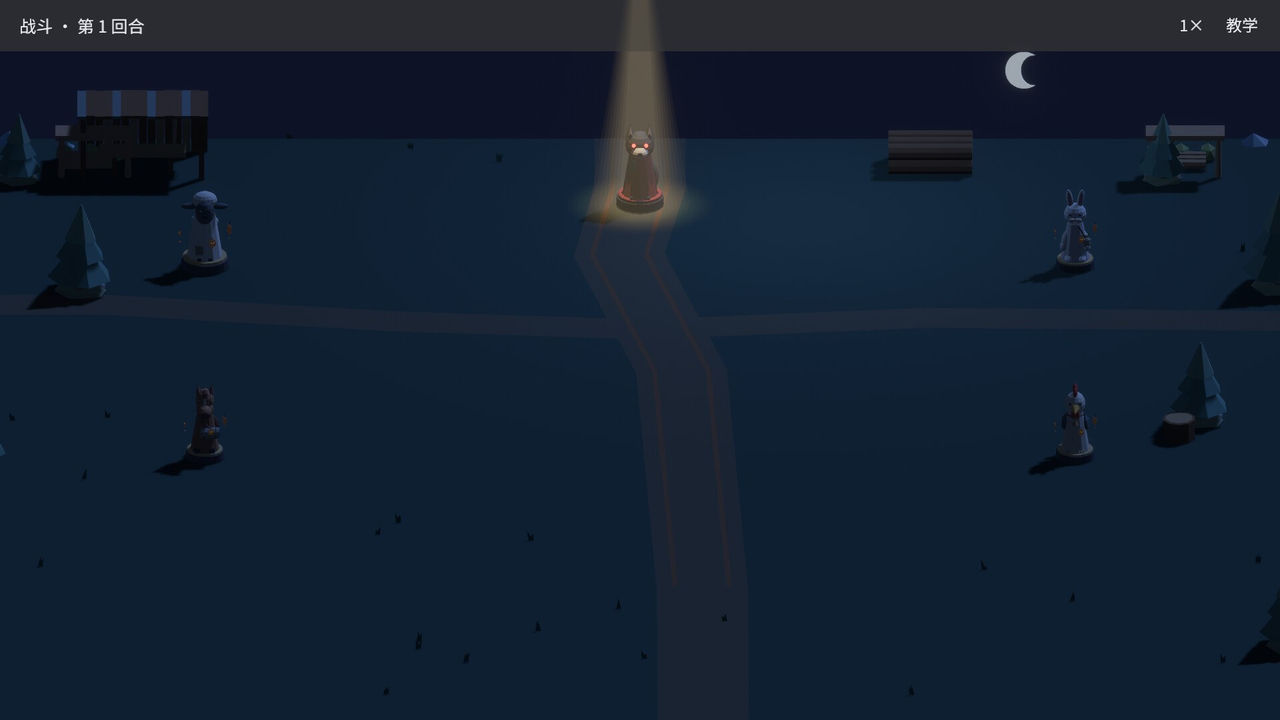
In battle, pieces act in order from highest to lowest Morale, so Morale is effectively initiative. At maximum Morale, a piece's next action unleashes an enhanced skill, which is the reward for protecting and building it. The catch is that taking direct damage also builds Morale, so a piece under pressure can climb the order. Pieces with insufficient Morale suffer Wavering and are temporarily unable to act, so the store page's core question is whether to keep building Morale or start the fight while your party still has strength to spare.
Cards, Cycles, and the Rest Camps
The card system and the recovery system meet at the Rest Camps. Between challenges you restore your party's Health at a campfire or a woodland hot spring, and the store page describes your pieces sitting and chatting, soaking and resting before setting off again as night gives way to sunrise. Health is the resource the camps refill, while Morale is the one the Boss attacks with Rumors, which is why the two need separate plans. For how these cards fit into a full run, see the Anshi how to play page and the Anshi guide overview; the Anshi bosses page covers the other side of the board.
FAQ
- What do cards do in Anshi?
- Cards are how you direct your pieces. The store page says you inspect both sides' actions, targets and upcoming skills and then use your cards to shift your own pieces' action cycles, bringing a needed skill forward, responding to the Boss's plans, and setting up the skills that follow.
- What is the difference between Health and Morale in Anshi?
- Health is what keeps a piece alive, while Morale decides acting order and skill strength. In battle pieces act from highest to lowest Morale, and at maximum Morale a piece's next action unleashes an enhanced skill. Taking direct damage also builds Morale.
- How many cards are in the hand in Anshi?
- Not documented yet. The store page refers to a limited hand that you use to counter Rumors during the Stealth Phase, but it does not publish hand sizes, deck sizes, or draw counts, so treat any specific number as unverified.
- Do cards in Anshi have random effects?
- No. Anshi is described as a single-player card strategy game with no gameplay randomness, so card behaviour is deterministic and outcomes follow from the action cycles you set up rather than from random rolls.
- What is an action cycle in Anshi?
- Each piece has its own skills and action cycle, according to the store page. The cycle is the order in which a piece's skills come up, and shifting it with cards is how you bring a needed skill forward or prepare the skill that follows.
References
Facts on this page are compiled from the references above. Items marked "to confirm" are single-source and not yet verified.